


FOR HIGH ROLLERS
 Lindsey Goldstein
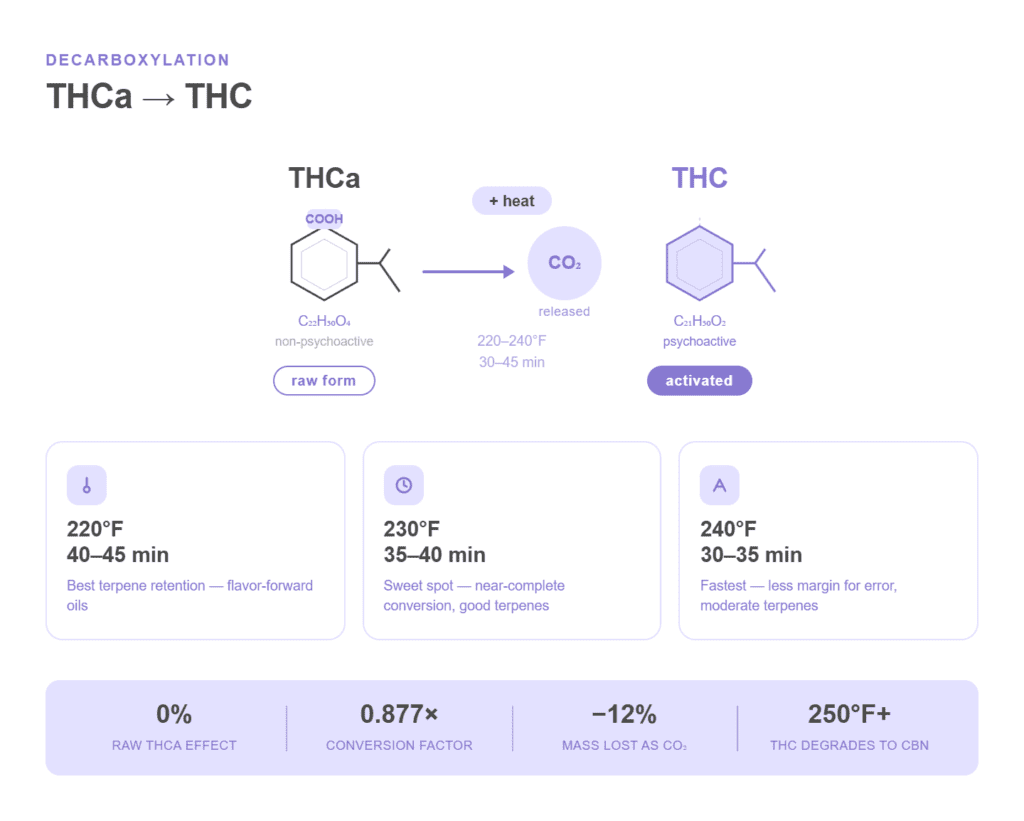
Quick Answer: To decarb THCa flower for edibles, break it into small pieces, spread it on a parchment-lined baking sheet, and bake at 220–240°F (104–115°C) for 30–45 minutes. This converts non-psychoactive THCa into active THC by removing its carboxyl group as CO₂ gas. Going too hot or too long degrades THC into sedating CBN and burns off terpenes that affect both flavor and effect. Getting the temperature right is the difference between a potent batch and a disappointing one.
Most people know that heating THCa converts it to THC. Fewer people know why that matters chemically, or why getting the temperature window right produces such meaningfully different results. This section covers both.
THCa is the naturally occurring, non-psychoactive form of THC in the raw cannabis plant. Its molecular structure includes an extra carboxyl group (COOH) that prevents it from binding effectively to CB1 receptors in the brain, which are the receptors responsible for producing psychoactive effects.
Consuming raw THCa flower produces minimal to no psychoactive response because the body cannot perform meaningful decarboxylation internally.
When you apply heat, the carboxyl group detaches from the THCa molecule as carbon dioxide gas. What remains is the neutral THC molecule, structurally restructured to interact with cannabinoid receptors.
Research published in PMC from the University of Mississippi found that THCa-A decarboxylates faster and more cleanly than other acidic cannabinoids like CBDa and CBGa, with essentially no meaningful side reactions at proper temperatures. Smoking and vaping trigger this same process instantly through combustion. Making edibles requires you to do it deliberately beforehand because food preparation temperatures are not high enough to decarboxylate on their own.
Chemically, THCa is THCa regardless of whether it is derived from hemp or traditional cannabis. The decarboxylation process works the same way. What makes THCa hemp flower different is that it often carries higher THCa concentrations than people expect.
Some strains run 20–30%+ THCa by dry weight. That means the math on potency matters more here than it does when cooking with lower-potency material. The COA attached to your flower is your starting point. The THCa% listed there represents your total activated potential before any losses occur during decarb.
The oven method is the most accessible and produces reliable results when done with some care. The material most guides skim over is not the process itself but the small decisions inside it: how you break the flower, where you position the rack, whether you cover the pan, and when you pull it. Each of those choices affects the final potency and flavor of your edibles.
Before starting, a quick word on what you need:
The thermometer is not optional. Most home ovens cycle their heating elements on and off continuously, causing internal temperatures to swing 10–25°F around whatever the dial says. A $10 oven thermometer eliminates the biggest variable in the entire process.
Break the flower into pieces roughly the size of a small grape. You want surface area exposed to heat, but you do not want powder. Using scissors or your fingers gives you more control than a grinder at this stage.
Grinders produce fine, inconsistent particle sizes. The finer the material, the faster it can overheat on the outer edges while the center pieces are still converting. Fine grinding also transfers cannabinoids and terpenes to the kief catcher and your fingertips, which is the potency you lose before the oven even turns on.
Preheat to 230°F (110°C) and let it fully come to temperature before loading anything. Use an oven thermometer to confirm this, not the dial. Middle rack position is important: the top of an oven runs hotter because heat rises, and the bottom rack sits too close to the heating element.
The middle rack gives the most even, consistent temperature exposure. Line your baking sheet with parchment and spread the flower in a single, even layer with no stacking or crowding. Crowded flower traps steam from residual moisture, which slows and unevens the decarb.
For the first 20 minutes, loosely cover the pan with a second sheet of parchment or a foil tent. This slows terpene off-gassing during the initial heating phase, when the material is still warming up and volatilizing quickly.
After 20 minutes, remove the cover and let the flower finish uncovered. This allows any remaining moisture to escape and lets the surface develop that golden-brown color that indicates you are in the right zone.
Total bake time is 30–45 minutes, depending on your target temperature. Check at the 25-minute mark. The flower should be transitioning from green to a warm golden-brown. If it is already dark brown at 25 minutes, pull it immediately and lower your oven temperature for future batches. Dark brown means the process has gone too far.
Once out of the oven, let the flower cool fully on the pan at room temperature for 20–30 minutes before doing anything with it. Hot decarbed material continues off-gassing terpenes even after the oven is off, and handling it while hot accelerates that loss.
Cooling also makes the material easier to work with without it crumbling into dust. Once cooled, transfer to an airtight glass jar and store away from light until you are ready to infuse.
The oven method works well, but it is not the right tool for everyone. Two other methods are worth knowing: sous vide for people who want better terpene retention or discreet odor control, and the mason jar method for a middle-ground between open-pan and fully sealed decarb.
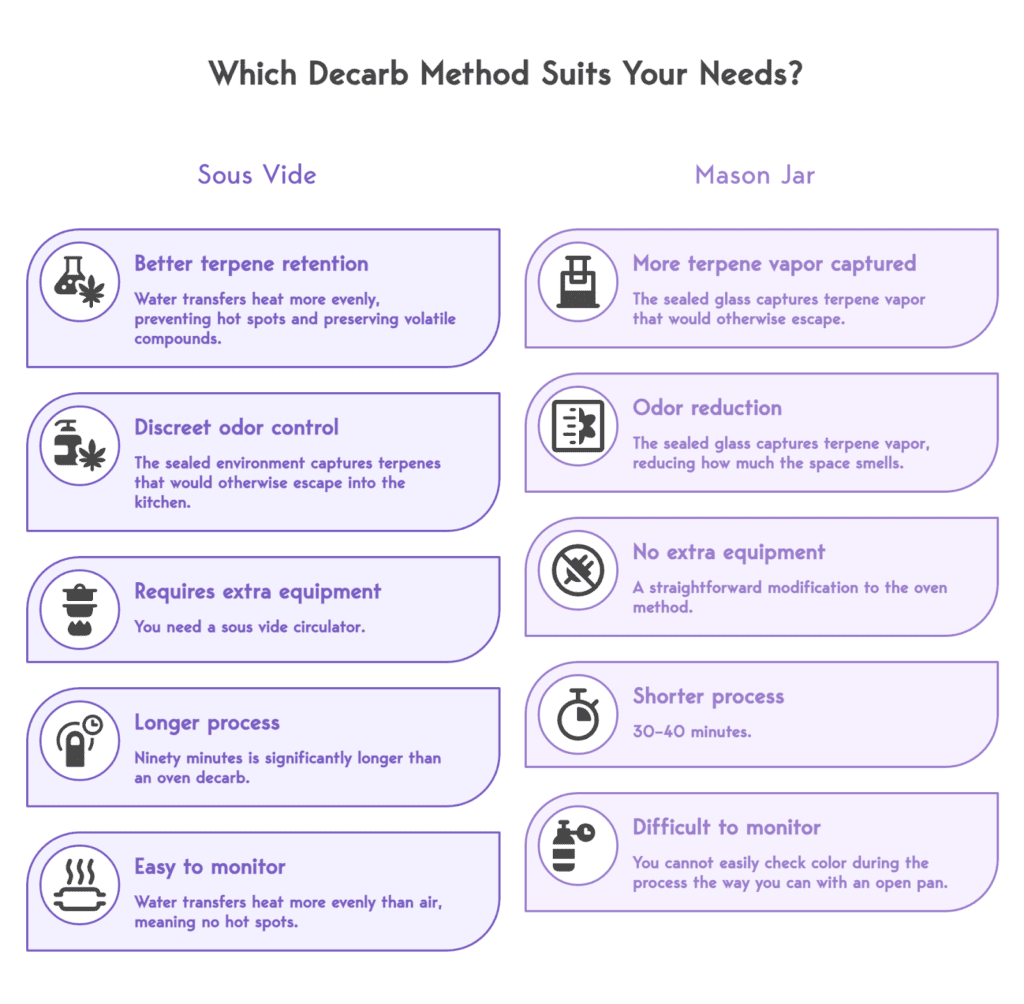
The sous vide method involves placing broken-up flower into a vacuum-sealed or ziplock bag with the air pressed out, then submerging it in a water bath held at 203°F (95°C) using an immersion circulator. Hold for 90 minutes.
Water transfers heat more evenly than air, which means no hot spots and no dry surface heat burning the outer edges of your flower before the inside converts. The sealed environment also captures terpenes that would otherwise escape into the oven, and your kitchen does not end up smelling like a cannabis greenhouse.
The trade-off is time and equipment. Ninety minutes is significantly longer than an oven decarb, and you need a sous vide circulator. If you are making edibles regularly and care about flavor as much as potency, that investment makes sense. If you are making a single batch, the oven is more practical.
The mason jar method is a straightforward modification to the oven method. Lightly pack the broken flower into a clean mason jar, seal the lid, and place the sealed jar in a 240°F oven for 30–40 minutes.
Shake the jar gently halfway through to redistribute the material. The sealed glass captures terpene vapor that would otherwise escape, which reduces how much the space smells and keeps more of the aromatic profile intact.
Let the jar cool completely before opening. Opening a hot mason jar releases a concentrated burst of terpene-rich vapor all at once, and a lot of it escapes before you can do anything useful with it.
The downside of this method is that you cannot easily check color during the process the way you can with an open pan, so it requires a bit more trust in your temperature settings and timing.
Temperature and time are the two levers you have. Adjusting either changes what you get at the end, and not always in the direction you expect.
At temperatures below 200°F (93°C), decarboxylation happens too slowly to be practical. The cannabinoid decarboxylation kinetics mentioned earlier also shows that at 80°C, conversion is still relatively slow even after 60 minutes. Your edibles will be weak and inconsistent.
At temperatures above 300°F (148°C), the problem shifts from under-conversion to degradation. THC itself begins breaking down into cannabinol (CBN), an oxidation byproduct that produces a noticeably different effect.
A 2022 PMC study on cannabinoid degradation kinetics confirmed that THC degradation into CBN accelerates significantly at elevated temperatures. The effect shift matters practically: edibles made from over-decarbed flower tend to feel heavy and sedating rather than the balanced, functional effect most people are after.
Beyond CBN formation, some cannabinoid content at extreme temperatures degrades into compounds that produce no effect at all. You do not get it back.
Terpenes are another casualty of high-heat decarb. Most terpenes in cannabis are volatile enough to begin evaporating well before cannabinoid degradation becomes a problem. If flavor matters to you in your finished edibles, that is another reason to stay lower and slower.
Here is how the main decarb temperature ranges play out in practice:
| Temperature | Time | THC Conversion | Terpene Retention | Best Use |
| 220°F (104°C) | 40–45 min | Good | Best | Flavor-forward oils, tinctures |
| 230°F (110°C) | 35–40 min | Near-complete | Good | General edibles, cannabutter |
| 240°F (115°C) | 30–35 min | Near-complete | Moderate | Faster batches, baked goods |
| Above 250°F | Any | Degrades | Poor | Not recommended |
This is the section most decarb guides skip, and it is the one that matters most for dosing edibles accurately.
THCa does not convert to THC on a 1:1 basis. When the carboxyl group detaches during decarboxylation, some molecular mass is lost as CO₂. The conversion factor is approximately 0.877, meaning for every 1mg of THCa, you get roughly 0.877mg of active THC under ideal conditions. This is the same factor labs use to calculate “total potential THC” on a COA. It is the number they report alongside your raw THCa percentage.
The Formula Looks Like This: (grams of flower) x (THCa% as a decimal) x 1,000 x 0.877 = potential THC in mg
Let’s take a common real-world example: 3.5g of flower at 25% THCa.
3.5 x 0.25 x 1,000 x 0.877 = approximately 767mg theoretical maximum.
Home decarb is not a perfect process. Accounting for realistic oven efficiency, terpene and cannabinoid loss, and handling, expect somewhere between 70–90% of that theoretical maximum to make it into your final infusion. That puts your actual yield closer to 537–690mg total. Divided into 24 gummies, that is roughly 22–29mg per piece.
Several factors reduce efficiency below the theoretical ceiling:
Knowing these numbers before you start is how you avoid the most common edible problem: dosing by feel and ending up with inconsistent results across a batch. For more on how THCa potency translates into actual effects, our guide on how much THCa to get high is a useful companion read.
Even with a good setup, things can go sideways. Knowing what to look for after the fact, and what actually happened at the molecular level, saves you from repeating the same mistake twice.
Under-decarbed flower looks mostly green or pale after baking, with little aromatic shift. Edibles made from it produce weak, inconsistent effects because only a fraction of the THCa converted. The fix is straightforward: return it to the oven for another 10–15 minutes at the same temperature. Under-decarbed flower can be re-decarbed without significant penalty.
Dark brown or burnt-smelling flower after baking is a sign that you have pushed past the optimal window. What happened at the molecular level is that THC converted into CBN at a higher rate than it should have. The effects of edibles made from over-decarbed flower shift noticeably: less cerebral, more sedating, and heavier than most people are looking for.
As the PMC cannabinoid degradation research confirms, the increase in CBN does not fully account for the total THC lost at high temperatures. Some of it simply degrades into compounds that do nothing. You cannot reverse an over-decarbed flower. Prevent it by pulling at the first sign of dark color and keeping a $10 oven thermometer in your oven permanently.
Strain selection matters more for edibles than most people realize. Different terpene profiles survive the decarb process differently, and the terpenes that do survive influence how the finished infusion smells, tastes, and feels.
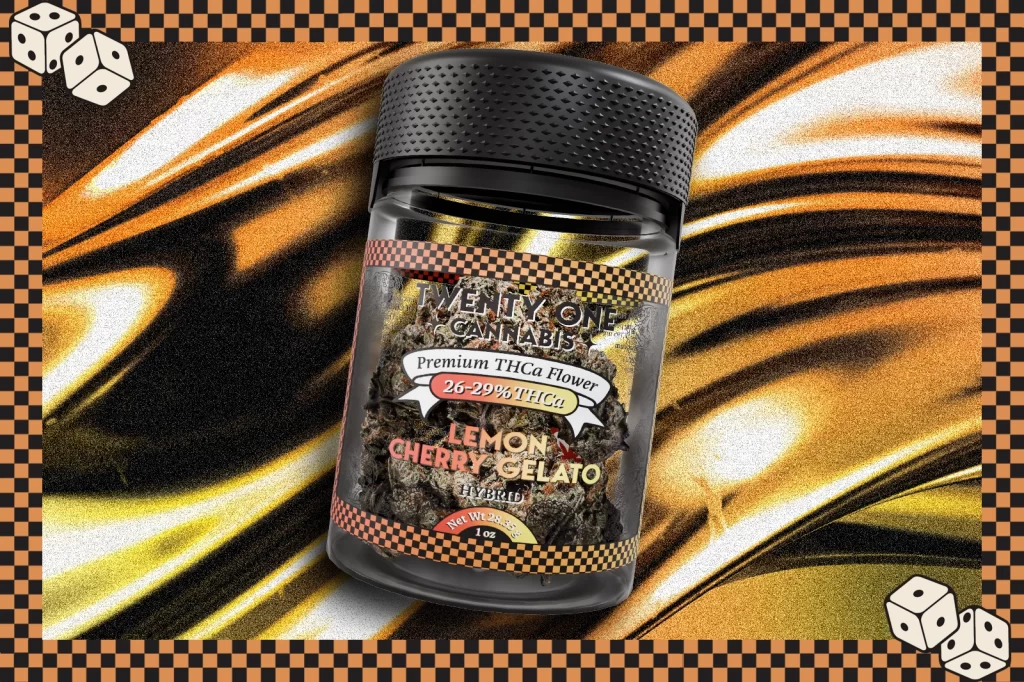
Lemon Cherry Gelato THCa Flower is a hybrid strain that carries a complex terpene profile anchored by sweet citrus and dessert notes. It is a popular choice for edibles because those fruit-forward terpenes hold up reasonably well under controlled decarb temperatures, contributing real flavor to infused oils and butters rather than just a generic cannabis taste. The balanced hybrid genetics also make for a well-rounded edible effect that is not too heavy or too racy.
Sour Diesel THCa Flower is a sativa-dominant strain with a pungent, fuel-forward terpene profile built around myrcene, limonene, and caryophyllene. If you are making edibles you plan to use during daytime hours,
Sour Diesel is a strong candidate. The more volatile terpenes in this profile will lose some intensity through decarb, which is why the mason jar or sous vide method is worth considering if you want to preserve as much of that character as possible in the finished product.
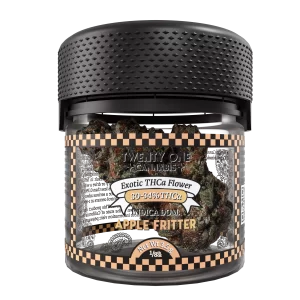
Apple Fritter THCa Flower is an indica-leaning hybrid known for dense buds, high THCa concentrations, and a sweet, earthy terpene profile. Apple Fritter is a particularly good candidate for baked goods because its richer, less volatile flavor compounds survive the double heat exposure of decarb plus cooking better than strains with lighter, more delicate terpenes. If you are making brownies or cookies and want the finished product to actually taste like something, this is one to try.
Making edibles with THCa flower is only as consistent as the flower you start with. If the THCa% on your product does not match what is actually in the package, your potency math is wrong from the first step. That is a real issue with lower-quality sourcing in this space.
Every batch of THCa flower at Twenty One Cannabis is independently lab-tested with batch-specific Certificates of Analysis that you can actually access. The farms we source from across Colorado, Oregon, California, and Arizona are vetted on-site, not just on paper. That means the THCa percentage on the label reflects what is in the jar, which is what makes accurate dosing math possible in the first place.
Authentic strain genetics also means the terpene profiles you are working with are consistent batch to batch, so your infusions do not taste different every time you make them.
If you are ready to get started, browse our full collection of THCa flower and find the strain that fits what you are making.
Yes, and more than most people expect. As the flower heats, terpenes volatilize and fill the surrounding space with a strong cannabis aroma. The mason jar method reduces this noticeably by containing those vapors during the process. Sous vide eliminates most of it because the flower never directly contacts open air during heating. If odor is a concern, either of those methods is worth the extra effort.
No. Microwave heating is uneven and unpredictable, with no reliable way to maintain the sustained, controlled temperature that decarboxylation requires. Microwaves create hot spots that can scorch parts of the flower while leaving other parts unconverted. The result is inconsistent potency, accelerated terpene loss, and no real way to know what you ended up with. Stick to the oven or sous vide methods.
Properly stored decarbed flower retains its potency for about three to six months. The key factors are light, oxygen, and temperature. Store in an airtight glass jar in a cool, dark place. Exposure to UV light converts THC into CBN over time even without additional heat, which is why amber or opaque containers are better than clear ones for longer storage.
Yes. Infusing flower directly into butter or oil without decarbing first leaves most of the THCa unconverted. The simmering temperatures used for infusion (typically 160–180°F) are not high enough to decarboxylate efficiently on their own, and the exposure time is too short. You will end up with a product that is rich in THCa but low in active THC, which means weak, unpredictable effects. Always decarb first, then infuse.
Yes, noticeably so. When you smoke or vape, THC enters the bloodstream through the lungs and reaches the brain within minutes. Edibles go through the digestive system, where the liver converts THC into 11-hydroxy-THC, a metabolite that crosses the blood-brain barrier more effectively and produces a longer-lasting, often stronger effect. The onset is also much slower, typically 45 minutes to 2 hours depending on metabolism and what you ate beforehand. Starting with a lower dose and waiting the full window before taking more is the most common advice for a reason.


Doctor of Pharmacy, Pharmaceutical Sciences University of Colorado
Co-Founder & CEO at Arvida Labs

You must be over 21 to enter.
GET NOTIFIED ABOUT ONLINE SALES AT 21 CANNABIS!