




FOR HIGH ROLLERS

 Fabian Raemy
Quick Answer: Vape cartridges are pre-filled oil tanks that attach to a separate 510-thread battery, giving you control over temperature and the ability to swap strains freely. Disposable vapes are self-contained, all-in-one devices with a built-in battery, no setup required. Both can carry the same quality oil. The difference is in hardware, flexibility, and how you prefer to vape.
You finally find a strain you’ve been wanting to try, and it’s available as both a cart and a disposable. Same strain. Similar price. You pick one, almost at random, and hope for the best. This scenario is more common than you think.
Most people have bought at least one vape in the wrong format without realizing it. Maybe the cart sat dead because you didn’t have a charged battery on you. Maybe the disposable ran out of oil right when the battery was just hitting its stride. Maybe you had no idea that the hardware you were using was running too hot and quietly burning off the terpenes responsible for half the flavor you paid for.
The cart vs disposable debate goes a lot deeper than convenience. It touches on how the hardware interacts with the oil, how much control you actually have over your session, and whether the format you gravitate toward is even suited to the type of concentrate you’re buying. This article breaks all of it down so the next time you’re staring at both options, the choice makes itself.
At a glance, both formats do the same thing: heat cannabis oil and turn it into vapor. But how they do it, and what that means for your experience, is where they start to diverge. Before comparing them side by side, it helps to know what each one physically is.
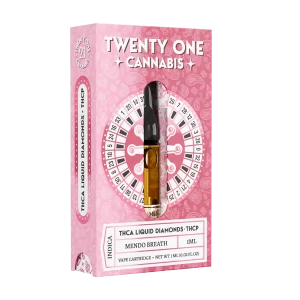
A vape cartridge is a pre-filled tank, typically glass or ceramic, that holds cannabis oil and connects to a battery via a 510-threaded base. The battery is sold separately. When you attach the cart and draw (or press a button), the battery sends power to a coil inside the cartridge, which heats the oil and produces vapor.
Because the battery is an independent piece of hardware, you control the voltage.
That means you can adjust the temperature, which directly affects how the oil behaves. We’ll talk more about that in the next section. Carts come in standard sizes, most commonly 1ml and 2ml, and can be swapped between sessions so you’re not locked into one strain until the device is empty.
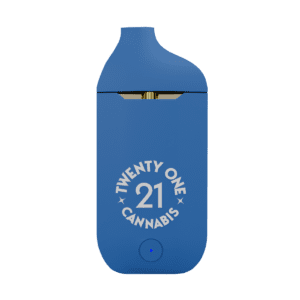
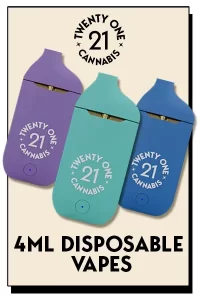
A disposable vape is a single, sealed device where the battery, coil, tank, and oil are all integrated. You open the package, draw on the mouthpiece, and it’s ready to go. There’s no threading, no battery charging before first use, and no separate parts to manage.
Modern disposables have come a long way from the basic single-use sticks of a few years ago.
Premium options now include USB-C charging ports so the battery doesn’t die before the oil runs out, adjustable airflow controls, preheat functions, and turbo ceramic coils designed to produce more consistent vapor across a larger oil volume. Once the oil is depleted, the full device is discarded.
| Feature | Vape Cartridge | Disposable Vape |
| Battery | External 510-thread battery | Built-in, rechargeable |
| Setup required | Yes — must attach to battery | None |
| Temperature control | Via battery voltage settings | Fixed or limited |
| Typical oil volume | 1ml–2ml | 2ml–4ml+ |
| Portability | Moderate | High |
| Strain swapping | Easy — detach and swap | One strain per device |
| Best use case | Home use, rotating strains | On-the-go, single-strain sessions |
Once you know the structural difference, the next layer is how hardware affects what you actually experience in a session. Flavor, hit consistency, and potency aren’t just a function of what oil is inside. The coil and temperature setup play a real role in how that oil performs.
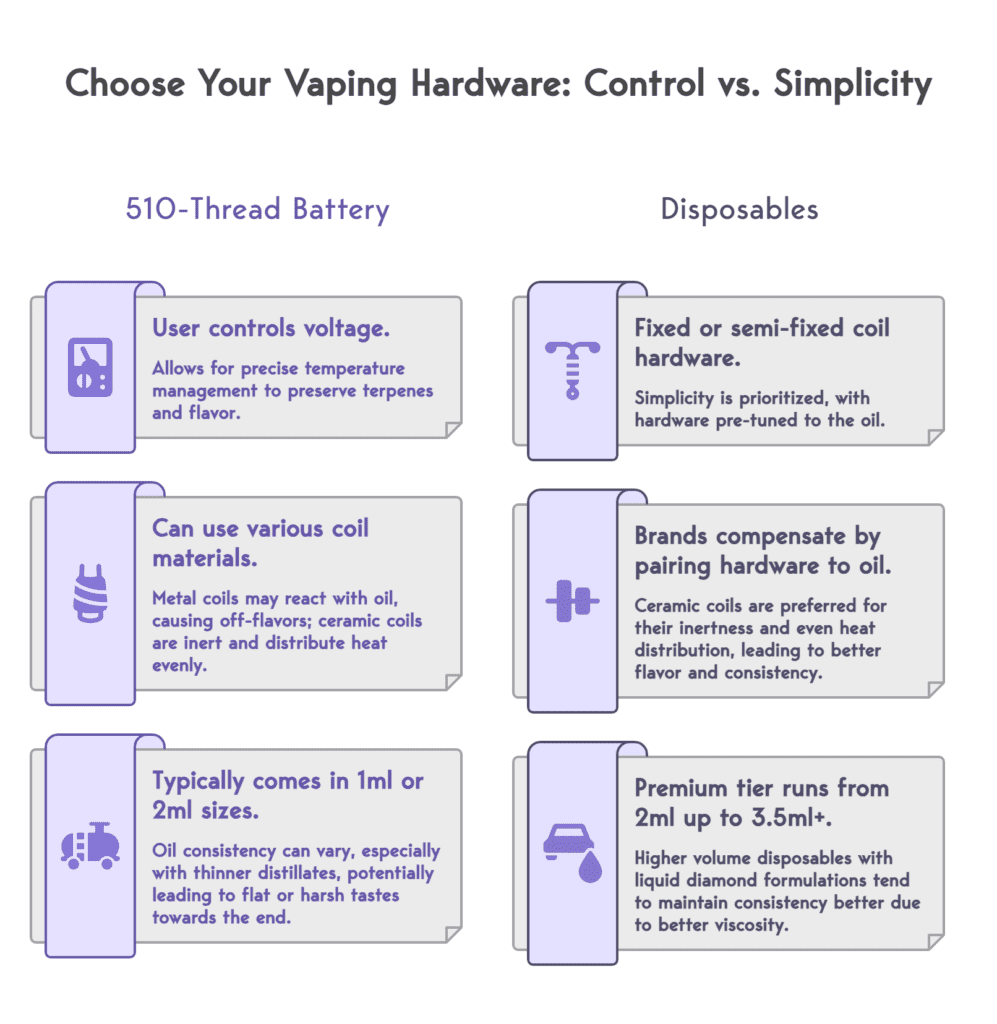
With a 510-thread battery, you’re in control of voltage, and voltage determines coil temperature. That matters because terpenes, the compounds that give each strain its flavor and contribute to its effects, are heat-sensitive.
Research suggests that excessive heat leads to terpene volatilization and degradation, altering both flavor and efficacy. Keeping voltage in a lower range (roughly 2.5V–3.0V for most THCa oil) preserves those compounds. Pushing too high starts burning them off.
Disposables, by design, use fixed or semi-fixed coil hardware. The trade-off is less customization for more simplicity. Quality brands compensate by pairing the hardware to the oil from the factory, so the coil is already tuned to the viscosity and cannabinoid profile of what’s inside.
If the device is built well, you don’t need to adjust anything. It’s already dialed in.
Coil material is one of the most overlooked specs in cannabis vaping, and it has a direct impact on what you taste. Published research on cannabis vaporization systems has shown that coil temperature at the site of vaporization varies significantly between devices, and that lower operating temperatures reduce the likelihood of thermal degradation products.
Metal coils can react with cannabinoids and terpenes at vaporization temperatures, introducing off-flavors that have nothing to do with the oil itself.
Ceramic coils are chemically inert. They don’t react with oil at heat and distribute the temperature more evenly across the coil surface. That means no metallic aftertaste, more consistent hits from first to last puff, and better preservation of the terpene profile.
Whether you’re buying a cart or a disposable, checking whether the hardware uses a ceramic coil is one of the fastest ways to assess whether a product was built to perform or just to look premium.
Carts typically come in 1ml or 2ml. Disposables at the premium tier run from 2ml up to 3.5ml and beyond. More volume means more sessions per device, but only if the oil holds up throughout. Thinner distillate-only oils can start to taste flat or harsh toward the bottom of a large tank, especially if the coil isn’t matched to the viscosity.
Liquid diamond formulations tend to stay more consistent across a larger tank because the concentrate maintains viscosity better than straight distillate. If you’re buying a high-volume disposable, the oil type inside matters as much as the ml count on the label.
This is the part most cart vs disposable comparisons completely skip. The format, cart or disposable, is just the delivery system. The oil inside determines the ceiling of what that device can give you. Two products at the same ml volume, same price, and same strain name can deliver completely different experiences based entirely on what’s in the tank.
Distillate is the baseline oil for most vapes on the market. It’s a refined THC or THCa oil that’s been processed to remove most of the plant material, resulting in a clean, consistent concentrate.
The trade-off is that distillation strips out much of the terpene complexity, so the flavor profile tends to be flatter unless cannabis-derived terpenes are added back in.
Enhanced blends take distillate as a base and upgrade it. They add cannabis-derived terpenes for flavor and effect depth, and stacking additional cannabinoids like THCp or Delta-8 to push potency and character beyond what a single-cannabinoid oil can do.
This is why two carts with the same THCa percentage can feel noticeably different: one might be straight distillate, the other might be a formulated blend where the additional cannabinoids change the duration, onset, and quality of the effect. The label won’t always tell you which you’re getting unless the brand is transparent about it.
THCa liquid diamonds are a specific type of concentrate designed to be integrated into vape formulations. Unlike the crystalline THCa diamonds you’d find in a concentrate jar, liquid diamonds are a semi-viscous, nectar-like extract with THCa concentrations above 40%, alongside a range of minor cannabinoids. They’re built to blend into distillate without losing potency or separating in the tank.
In practical terms, this means a cartridge or disposable carrying liquid diamond oil is operating at a fundamentally different potency level than one carrying standard distillate, even at the same ml volume.
The effects tend to be heavier, longer-lasting, and more full-spectrum in character. It’s also worth knowing that liquid diamonds aren’t a gimmick label: the concentration difference between a liquid diamond formulation and a standard distillate cart is significant enough that users with a moderate tolerance often notice it immediately.
Checking a product’s certificate of analysis is the clearest way to confirm what’s actually in a given vape before you buy.

Hardware specs set the stage, but the real decision comes down to how and where you use cannabis. Both formats are capable of delivering excellent experiences — the question is which one fits your routine.
Cartridges are the better pick if you already own a quality 510-thread battery and want to get the most from it. Variable voltage gives you real control over the session. Lower settings for terpene-forward flavor, higher settings when you want bigger clouds.
The ability to detach and swap strains between sessions is also a meaningful advantage for anyone who likes to rotate based on time of day or desired effect.
From a cost-per-use standpoint, carts tend to be the more economical option over time since the battery is a one-time purchase. They’re also easier to store at home without worrying about charging a built-in battery between sessions. If most of your vaping happens in a single location and you like dialing in your setup, carts give you more tools to do that.
Here are the key reasons to choose a cart:
Disposables remove every friction point from the vaping experience. No battery to charge beforehand, no threading, no voltage to set. You just open it and use it. That makes them the obvious choice for travel, outdoor sessions, concerts, or any situation where carrying loose hardware is impractical.
Modern disposables with USB-C charging and adjustable airflow have closed the performance gap considerably, so you’re not giving up much in terms of experience for the added convenience.
They’re also a lower-commitment way to try a new strain or cannabinoid blend. If you’re not sure whether you like a particular formulation, buying a disposable lets you test it without also buying a separate battery or committing to a larger cart format. High-volume options (3ml and above) give you enough sessions to get a real read on how a strain performs across different moods and settings.
Here are the key reasons to choose a disposable:
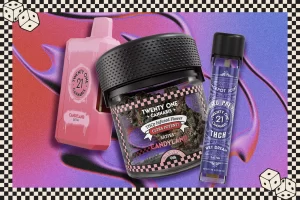
If you’re deciding between formats, it helps to see what actually lives on both sides of that line. Here are four options worth looking at: two carts and two disposables across different strain types and formulation tiers.
The OG Kush (Hybrid) 1ml vape cart is a strong entry point into the cart format. The oil is a blend of THCa liquid diamonds, Delta-8, and THCp, not standard distillate, which means the effect profile is richer and longer-lasting than a basic cart at the same price range.
OG Kush brings a woody, earthy pine flavor with a touch of citrus, and the hybrid balance makes it versatile enough for afternoon or early evening use. Attaches to any standard 510 battery.
The sativa Lemon Skunk vape cart has the same liquid diamond and THCp base formula but in a sativa-leaning direction. The terpene profile skews citrus-forward, bright and sharp on the inhale, with the kind of uplifting, clear-headed effect that works well for daytime sessions. Same 510 compatibility, same formulation quality. Just a different experience in terms of where sativa effects take you.
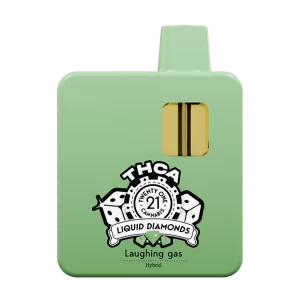
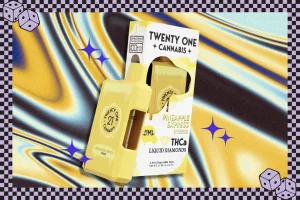
On the disposable side, the Pineapple Express Hybrid diamond disposable is built for users who want serious volume with no setup. 3.5ml of liquid diamonds oil in a device with a turbo ceramic coil, USB-C charging, and adjustable airflow.
The Pineapple Express strain brings tropical sweetness on the inhale with an earthy pine finish, and the effect is energetic and sociable. It’s calming enough to stay balanced but lifted enough to carry a creative session or a late night.
For a more relaxed disposable pick, the Pop Rocks indica vape runs the same hardware and oil-quality standard as the Pineapple Express but in an indica profile suited to evening use. Same ceramic coil, same USB-C charging, same liquid diamonds formulation, just pointed toward body relaxation and winding down rather than staying lifted.
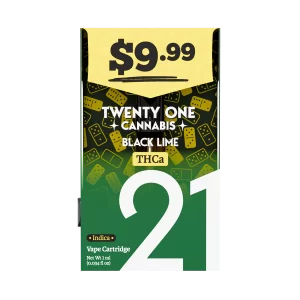
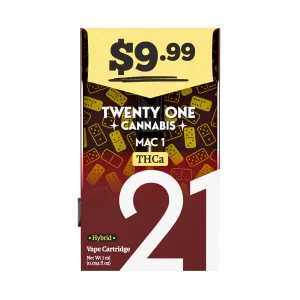
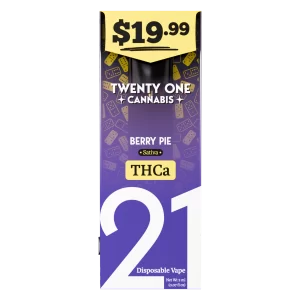
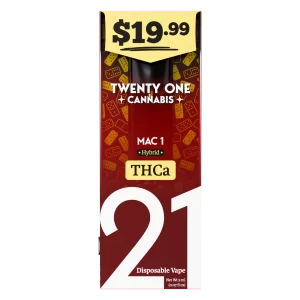
Twenty One Cannabis stocks both formats because the right choice depends on the person using it, not on which format sounds more premium. The cart line runs THCa liquid diamonds blended with THCp, Delta-8, and cannabis-derived terpenes, the same formulation standard as the disposable line.
There’s no budget tier hiding in one format versus the other. What changes is the hardware experience: the control and flexibility of a 510-thread setup on one side, the grab-and-go simplicity of a self-contained device on the other.
Every product across both lines is independently tested by a third-party lab, with batch-specific COAs available so you can verify potency and purity before you buy. No guesswork, no vague claims — just transparent cannabinoid data matched to a format that fits your life.
Browse our full collection of vape products and find the cart or disposable that’s built for the way you actually vape.
Not inherently. Hit intensity is determined by the oil type and the temperature at which it’s vaporized, not the format. A cart running liquid diamond oil through a variable-voltage battery can hit harder than a disposable running standard distillate, but a high-quality disposable with liquid diamonds oil will typically outperform a basic distillate cart. Focus on what’s in the tank first, then the hardware.
Most 510-thread carts are physically compatible with any standard 510 battery. The more relevant question is whether the battery’s voltage range is appropriate for the oil type. THCa liquid diamond oil performs best at lower voltages (around 2.5V–3.0V) to preserve terpene character. A battery that only runs at 4.0V can technically power a cart, but it will likely burn the oil and flatten the flavor. Variable-voltage batteries give you the range to dial in the right setting.
Disposables generate more waste per use since the entire device is discarded when empty. Carts reduce hardware waste because only the oil unit is replaced and the battery is reused indefinitely. Some brands offer recycling programs for disposable devices. If environmental impact is a factor in your buying decision, carts paired with a durable battery are the lower-waste option.
Practically speaking, they should yield a similar number of puffs since the oil volume is the same. Draw length is the main variable — shorter 2-3 second pulls use less oil per session than longer draws. For more detail on managing cart longevity, the how long does a cart last breakdown covers what actually affects puff count.
A cart uses the universal 510-thread connection and works with any compatible battery. A pod is a proprietary format designed to work only with a specific brand’s battery device — similar to a closed-loop system. Pods are not interchangeable between brands. Carts are, which is why the 510 standard remains the dominant format for hemp-derived vapes.
It can, but it doesn’t have to. Some brands reserve their premium oil formulations for one format and put lower-tier oil in the other. With Twenty One Cannabis, the THCa + THCp cart line and the liquid diamonds disposable line both use enhanced formulations rather than straight distillate. Checking the product description for specific cannabinoid blend info — and verifying it against the COA — is the best way to confirm you’re comparing equivalent oil quality across formats.
Vapor production will noticeably decrease and the flavor may turn slightly harsher or flatter as the oil level drops. Some devices have a visible window on the tank so you can see the oil level directly. On devices without a window, a preheat function can help — if the preheat produces less vapor than usual, the oil is getting low. For more on reading your device, the guide on how to know when your disposable vape is almost empty covers the specific signs.


Doctor of Pharmacy, Pharmaceutical Sciences University of Colorado
Co-Founder & CEO at Arvida Labs

You must be over 21 to enter.
GET NOTIFIED ABOUT ONLINE SALES AT 21 CANNABIS!