



FOR HIGH ROLLERS
 Lindsey Goldstein
Quick Answer: A blinker hit is when you hold down the button on a vape device until it blinks, signaling the battery’s maximum draw limit has been hit. While the idea is to get the hardest hit possible, blinkers overheat the coil, degrade the oil, and accelerate wear on the battery, ultimately leading to a worse experience than a properly timed pull would.
Blinker hits have been part of cannabis vape culture for years, but the actual mechanics behind them are rarely explained.
Most users stumble across the term in a group chat or forum, try it once out of curiosity, and either keep chasing it or swear it off. If you fall into either camp without really knowing what is happening inside your device, this section is for you.
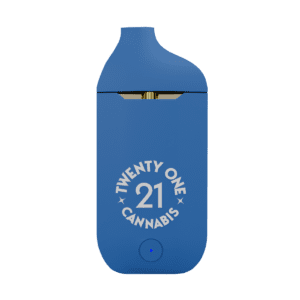
Every 510-thread battery and disposable vape device has an automatic shutoff built into the firmware. This is a safety feature.
When you hold the fire button down continuously, the device measures the elapsed draw time and cuts power at a predetermined point, most commonly between 8 and 10 seconds. Right before that cut-off, or at the exact moment it triggers, the LED indicator light blinks. That blink is the device telling you it has hit its maximum allowed draw and shuts off the heating element.
The blink is not a green light to keep going. It is a ceiling, not a goal. The device’s designers put that shutoff there to prevent coil burnout and to protect the battery from excessive strain in a single draw cycle.
When people say they “hit a blinker,” they mean they held the button the full duration until that warning blink fired.
The logic behind blinker hits makes sense on the surface. Longer draw equals more vapor equals stronger hit. For new users especially, if a few seconds feels good, ten seconds must feel incredible. Some experienced users chase blinkers for tolerance reasons, assuming that sheer volume of vapor is the solution when effects start to plateau.
The problem is that volume and quality are not the same thing. You can inhale a massive cloud of degraded, burnt oil and feel less than you would from two clean, well-timed pulls.
The relationship between vaping technique and cannabinoid delivery is more nuanced than most people realize, and blinkers tend to work against you on almost every metric that matters.
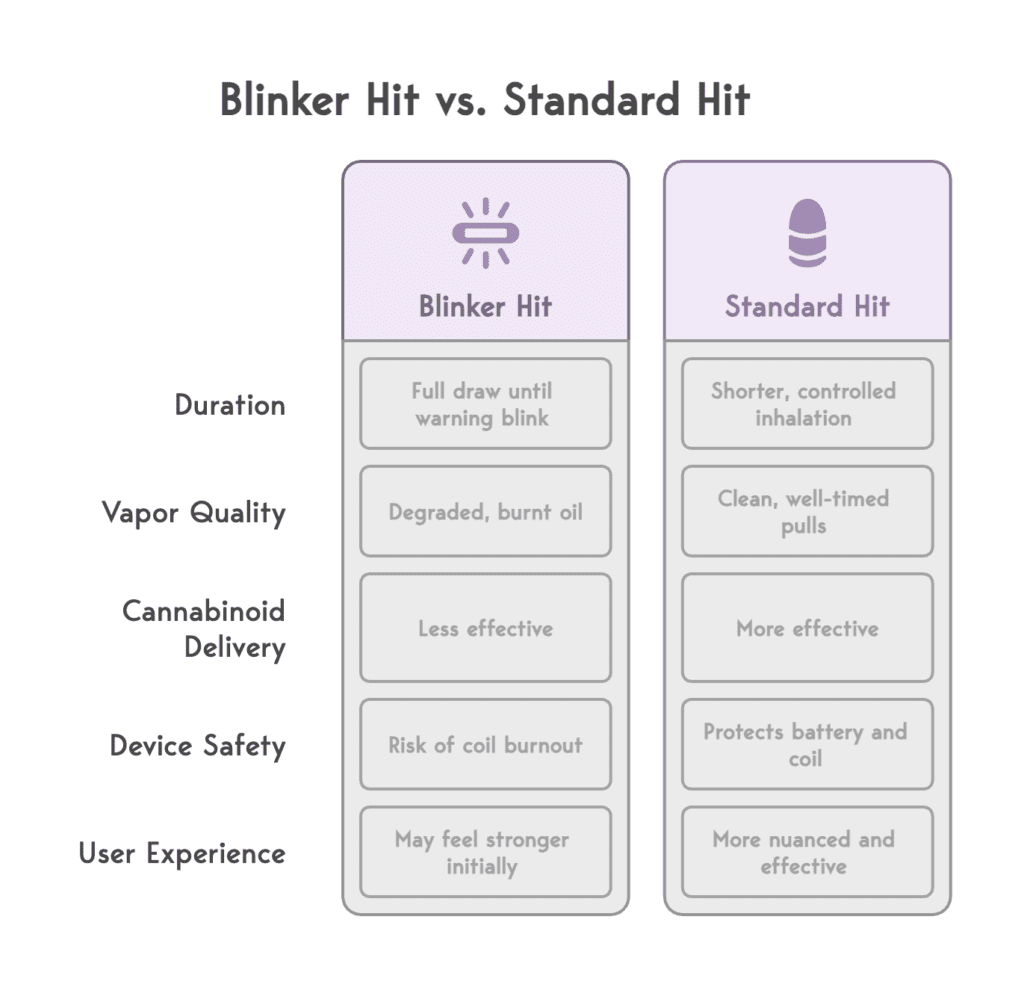
The appeal of blinkers is easy to understand, but what happens inside your device during that extended draw is something most people have never seen explained. Each component reacts differently to the sustained heat, and the cumulative effect adds up faster than you would expect.
The heating element in your vape cart or disposable is engineered to operate within a specific temperature range. When you draw for 2-3 seconds, the coil heats up, vaporizes the oil in contact with it, and gets a moment to settle before the next pull.
A blinker eliminates that recovery window entirely. Research published in PMC found that voltage-controlled 510 systems reached average coil temperatures of 450°C to 543°C at common voltage settings, with significant variability even within a single draw.
At those temperatures, sustained for nearly ten seconds, the coil is not just warm. It is running hot enough to cause measurable thermal stress on the metal and surrounding components.
Most consumer-grade carts are not built to handle that kind of sustained load repeatedly. Coils are rated for short burst heating cycles. Running them to their absolute limit on every hit shortens their operational life, and a degraded coil produces uneven heating that compounds every other problem on this list.
Ceramic and cotton wicks pull oil into contact with the heating element. The oil feeds through at a rate based on its viscosity and the capillary design of the wick material.
During a normal 2-3 second draw, that feed rate roughly matches the rate of consumption. During a blinker, the coil burns through the available oil faster than the wick can replenish it. When the oil runs out mid-draw, the coil begins heating the wick material directly.
This is what produces the harsh, acrid taste that most people recognize as a burnt hit. Even if the wick does not char visibly, repeated dry hits from blinkers create microscopic damage that permanently changes how the device wicks and performs.
Lithium-ion batteries, which power virtually every disposable and 510 battery on the market, are sensitive to prolonged high-drain events. A blinker forces the battery to sustain maximum current output for the full draw cycle without any rest.
Research suggests that the combination of extended heat exposure and temperature cycling in vape devices contributes to accelerated degradation of internal components, including the battery cells.
In practical terms, this means a device used primarily for blinkers will hit noticeably weaker after far fewer draws than one used with short, controlled pulls. The battery loses capacity faster, and you end up throwing away oil that is still in the cart because the device can no longer vaporize it properly.
This is perhaps the most overlooked damage from blinker hits. The oil itself is not heat-stable at extreme temperatures. THCa begins converting to Delta-9 at moderate heat, but at the excessive temperatures generated during a sustained blinker, that process does not stop at Delta-9.
Cannabinoids continue degrading into oxidized byproducts, and terpenes, which are far more volatile than cannabinoids, evaporate or break down well before the vapor reaches your lungs.
A 2024 study published in PubMed found that thermal transformation of cannabinoids during vaping produced a range of conversion products, with most increasing as coil power went up. You are not just losing terpenes to blinkers. You are chemically altering the cannabinoid profile you paid for.
| Component | Normal Draw Impact | Blinker Hit Impact |
| Coil | Heats and recovers within cycle | Sustained stress, accelerated wear |
| Wick | Oil feed matches consumption rate | Dry hits, charring, permanent damage |
| Battery | Short high-drain burst, recovers | Prolonged discharge, capacity loss |
| Cannabinoids | Efficient vaporization at target temp | Thermal degradation into byproducts |
| Terpenes | Preserved through controlled heat | Volatilized or destroyed before inhale |
| Flavor | Clean, strain-accurate profile | Burnt, flat, or chemically altered |
The damage to the device is real, but the more immediate reason to ditch blinkers is what they do to the actual experience. Chasing a harder hit and getting a worse one is the outcome most blinker users land on, even if they can not pinpoint why.
Once you have taken a properly burnt hit from a cart, the flavor profile of that session is compromised. The charred terpene compounds coat the vapor path and mix into every subsequent draw. Even if your next hit is perfectly timed, it still tastes slightly off because you are pulling through residue from the blinker.
If you care at all about the strain experience, terpenes are a big reason why the same cannabinoid profile can feel completely different from one strain to another, and blinkers are burning them off.
The vapor produced during a blinker is hotter, denser, and chemically more complex than vapor from a controlled draw. Inhaling superheated aerosol for 8-10 seconds at a time puts repeated thermal stress on the throat and airways.
This is not a minor comfort issue. Research on terpene thermal degradation at vaping temperatures found that elevated temperatures produce additional reaction products from compounds that would otherwise vaporize cleanly.
The harshness is not just the temperature. It is the altered chemistry of what you are inhaling. If you find yourself coughing hard after every pull, the draw technique is very likely the answer.
More vapor does not mean more THC absorbed. At the extreme temperatures of a blinker hit, a significant portion of the cannabinoid content degrades before it even leaves the device. What you inhale is a mix of intended cannabinoids and thermal byproducts, and your body processes those differently.
On top of that, inhaling a massive volume of hot vapor in one breath typically means less efficient absorption, and much of it ends up exhaled rather than absorbed. Two intentional 3-second draws, spaced a few seconds apart, will consistently deliver more usable cannabinoid content than a single blinker, while also treating the device far better.
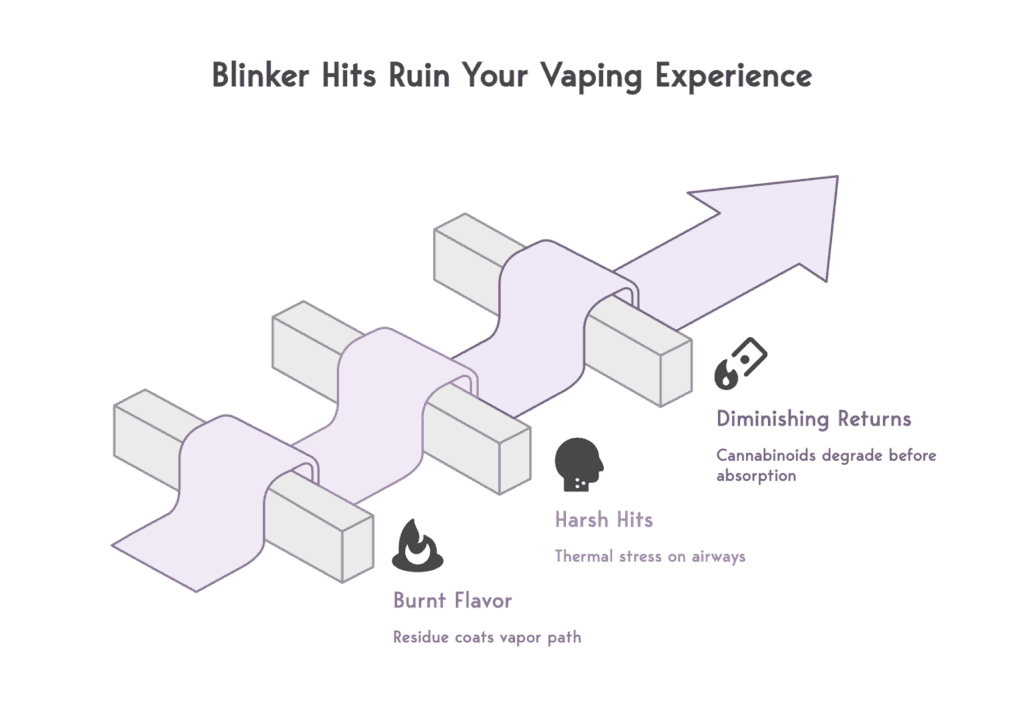
Getting intense effects from a cart does not require pushing the device to its limits. The techniques that consistently produce the strongest, cleanest hits are the ones that work with the device’s engineering rather than against it. A few simple adjustments make an immediate difference.
Here is a practical breakdown of what separates sustainable hitting technique from the blinker approach:
Technique matters, but the quality of what you are vaping matters just as much. A well-formulated cart with proper oil viscosity, a quality coil, and a terpene profile built to survive the vaporization process performs dramatically better and makes it far less tempting to compensate for a bad product with aggressive hitting.
The THCa + THCp 1ml Vape Cartridge in Super Silver Haze is a sativa option built for users who want a clear-headed, creative high without needing to chain hits to feel it.
The blend combines THCa liquid diamonds, THCp, Delta-8, and HHC, a multi-cannabinoid formulation designed to deliver layered effects from a controlled, properly-paced draw. Because the oil is concentrated and the cannabinoid blend is potent on its own, there is no need to overheat it. Two clean 3-second pulls from this cart will do more than a blinker from a poorly formulated generic.
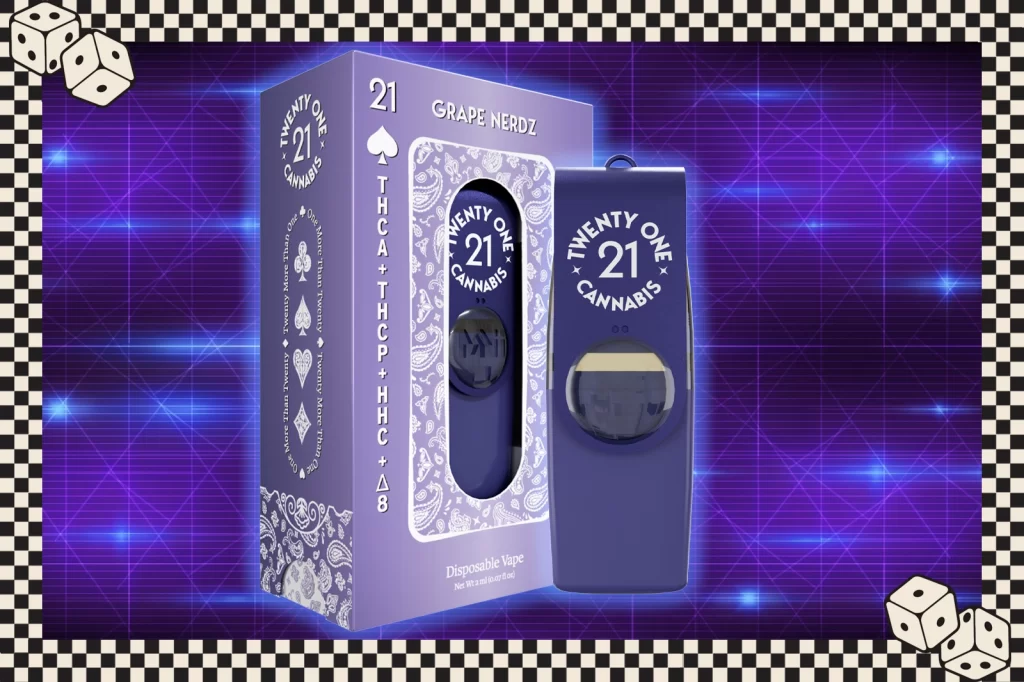
For users who prefer a disposable with more oil volume, the THCa + THCp 2ml MNii Disposable Vape in Grape Nerdz brings a well-rounded indica experience with an interesting cannabinoid stack. It has 1470mg Delta-8, 135mg THCa, 92mg HHC, and 85mg THCp in a 2ml device built with a 1.2 subohm ceramic coil and USB-C charging.
The ceramic coil is worth noting specifically because ceramic distributes heat more evenly than standard wire coils and is more resistant to dry-hit damage, meaning it is more forgiving of technique without being infinitely tolerant of abuse. Used with proper pacing, this one punches well above its price point.
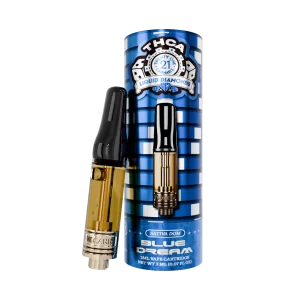
The Blue Dream 2ml THCa Diamonds Vape Cartridge rounds out the lineup for sativa-dominant users who want something familiar and well-documented. Containing 135.4mg of THCa liquid diamonds in a 2ml 510-thread cart, Blue Dream’s cannabinoid density means every properly-timed draw is delivering meaningful THCa content.
The sweet blueberry and citrus terpene profile is exactly the kind of expression that gets destroyed by blinker heat, but comes through clean and recognizable when you hit it right. This is the kind of cart where technique actually shows up in flavor and where the investment in good oil pays off with every pull.
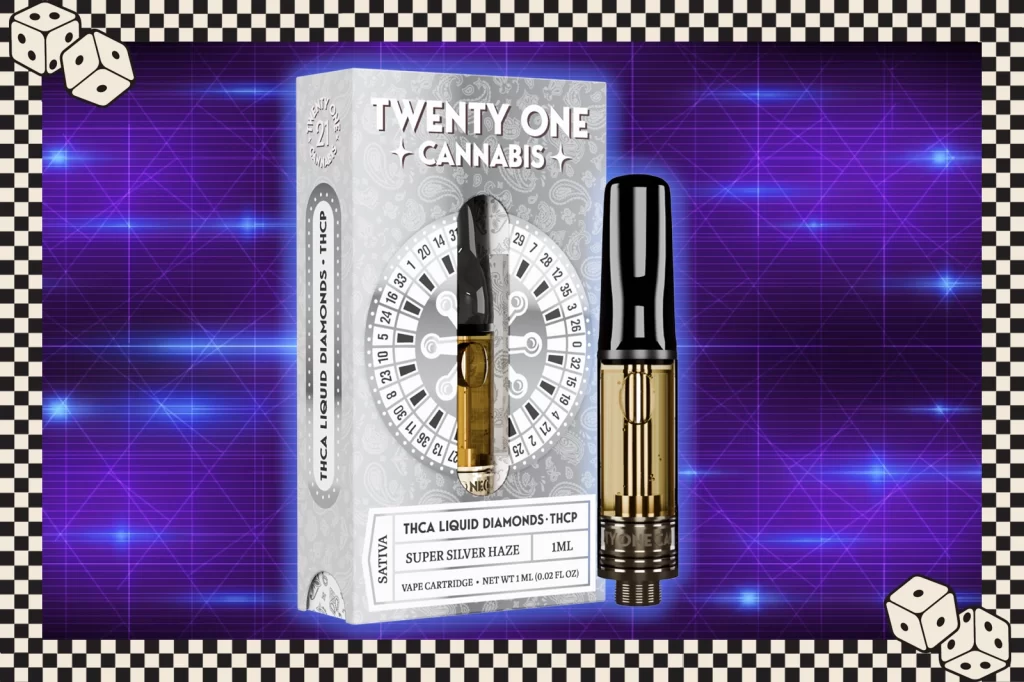
Twenty One Cannabis sources products from vetted farms across Colorado, Oregon, California, and Arizona, with batch-specific Certificates of Analysis available for every product.
That transparency matters when it comes to vaping technique, because knowing what is actually in your cart is the first step toward treating it the way it deserves to be treated. Products formulated with real THCa liquid diamonds and authentic terpene profiles are built to reward controlled, intentional draws. They are not built to survive being blinked repeatedly.
The carts and disposables available are lab-tested for potency, purity, and safety, meaning the cannabinoid content listed is what you are actually getting — provided you vape it correctly. Blinkers waste that investment. Proper technique unlocks it.
Browse our full collection of vape cartridges and disposables and find a product worth hitting the right way.
A blinking light on a vape device is typically the auto-cutoff safety feature activating after the maximum draw duration has been reached, which is usually 8-10 seconds. It can also indicate a low battery, a connection issue between the cart and battery, or an overheating warning on devices with temperature protection. If your device blinks immediately when you try to fire it, the issue is likely a battery or connection problem rather than a completed draw.
Not reliably. At the extreme temperatures produced during a sustained blinker draw, a portion of the cannabinoids and terpenes degrade before they are inhaled. The result is often a harsher, less efficient hit than two controlled 3-second draws taken with spacing in between. Volume of vapor is not the same as concentration of usable cannabinoids, and degraded oil delivers a different — typically less clean — effect than properly vaporized oil.
Most vape hardware engineers for draws in the 2-4 second range. Three seconds is the general consensus for standard 510 carts and most disposable devices. This keeps the coil within its designed operating temperature, allows the wick to keep up with oil consumption, and delivers vapor at peak cannabinoid concentration without pushing into thermal degradation territory.
Yes, repeated blinker hits can cause lasting damage to a disposable. Wick charring, coil degradation, and battery capacity loss from sustained high-drain draws can all permanently reduce device performance. A disposable that has been blinked heavily may start producing burnt-tasting hits, weaker vapor, or shorter battery life well before the oil is finished, meaning you waste both the device and the remaining oil inside it.
Research suggests that most THC absorption happens within the first few seconds of holding vapor in the lungs, meaning extended breath-holds do not meaningfully increase the effect but do increase irritant exposure time. Holding a vape hit in for 5-10 seconds does not make it stronger — it just keeps hot vapor and potential byproducts in contact with lung tissue longer. Exhaling normally after a short hold of 1-2 seconds is sufficient and reduces unnecessary respiratory exposure.
A burnt taste after just one pull usually means the wick ran dry. This can happen if the oil is thick and has not warmed up yet, if the cart is running very low, or if a previous draw consumed the available oil faster than the wick could replenish. Primer draws, waiting between hits, and keeping the cart stored upright with the mouthpiece up all help keep the wick properly saturated. If the burnt taste persists across multiple sessions, the wick or coil may have been permanently damaged.
For most THCa liquid diamond carts, a voltage between 2.4V and 3.0V is the sweet spot. THCa converts to Delta-9 THC at lower temperatures than many people assume, so you do not need high heat to activate it. Higher voltages push coil temperatures into ranges where terpenes degrade and cannabinoids can break down into unwanted byproducts. Start low, take a test draw, and increase only if needed — not by default.


Doctor of Pharmacy, Pharmaceutical Sciences University of Colorado
Co-Founder & CEO at Arvida Labs

You must be over 21 to enter.
GET NOTIFIED ABOUT ONLINE SALES AT 21 CANNABIS!