



FOR HIGH ROLLERS
 Fabian Raemy
Quick Answer: THCa snow caps are made by coating cannabis flower in a crystalline THCa-rich material, typically kief or crushed THCa isolate, until the bud takes on a white, frosted appearance. The process itself takes under ten minutes, but the quality of your base flower and the concentrate you use will determine whether the finished product actually delivers or just looks the part.
Snow caps have carved out a specific niche in cannabis culture: they look impressive, they hit noticeably harder than regular flower, and they carry that premium-tier energy that makes people want to share them. If you’ve seen them on Reddit threads, YouTube videos, or in dispensary showcases, you probably already understand the appeal.
The problem is that most tutorials gloss over the single most important variable in the whole process: what you actually put on the outside of the flower. Anyone can press a bud into a pile of powder. Getting that coating to burn cleanly, stay intact, and genuinely increase potency in a reliable way is a different story. The type of concentrate you use, the flower you start with, and how well you apply the material all interact to either make or break the experience.
This guide covers everything you need to actually get it right: from choosing the best base flower to applying your coating correctly. And it will be direct about where the DIY process runs into real limitations.
Before getting into how to make them, it helps to know exactly what you’re working with and how snow caps differ from similar products that often get lumped in with them.
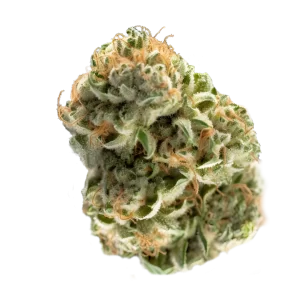
THCa snow caps are flower buds that have been coated in a dry, crystalline material, most often kief or crushed THCa isolate, until the surface looks white and frosty.
The effect is both visual and functional. The concentrate coating raises the total THCa content of the bud significantly above what the base flower alone provides. When you smoke or vaporize a snow cap, the THCa in both the flower and the coating decarboxylates into THC, making the experience noticeably more potent than a regular bowl or joint of the same strain.
Because the coating is dry and crystalline rather than oil-based, snow caps burn more similarly to standard flower than some other infused formats.
These three formats get mixed up often enough that it’s worth drawing a clear line between them.
Snow caps are the most approachable of the three for everyday use and the most dependent on the quality of both components working together.
The materials list is genuinely short. There are just two ingredients that matter enormously, and most guides treat them like they don’t.
The flower you start with does more than just carry the concentrate. Its surface texture and moisture content directly determine how well the coating adheres, how evenly it distributes, and how cleanly the finished snow cap burns.
Dense, well-cured nugs with a naturally sticky trichome layer are the ideal starting point. When you pick up a quality bud, and it leaves a bit of resin on your fingers, that stickiness is doing real work. It allows the concentrate to bond to the surface without needing any additional adhesive.
Some of the best flower types to use as a snow cap base include:
This is where the quality gap between DIY snow caps becomes most apparent.
Kief is the easiest option to access; most grinders collect it in a bottom chamber automatically, but it’s also the most inconsistent. Grinder kief captures everything that falls through the screen: trichome heads, plant matter fragments, broken pieces of leaves.
The result is a powder with highly variable THCa content that produces unpredictable potency from one batch to the next.
Crushed THCa isolate is a significantly better choice. THCa isolate is pure, crystalline THCa that’s been extracted and separated from other plant material. When crushed to a fine powder, it adheres to flower well and delivers a much more consistent potency increase than kief.
It also burns cleaner, since there’s less plant material present to produce harsh or off-flavored smoke. If you want to go further, some people apply a thin layer of terpene sauce or live resin to the flower surface before pressing on the crushed isolate.
This improves adhesion and adds complexity to the flavor. You can read more about how THCa diamonds compare to other concentrates to get a clearer picture of where isolate fits in the concentrate spectrum.
A thin coating of terpene sauce, live resin, or concentrate oil can be applied to the surface of the bud using a dab tool before pressing it into the crystalline material. This improves surface contact and helps the concentrate stay in place longer, especially during storage or when breaking the bud apart.
The key word here is thin. Too much oil changes the burn profile significantly. The bud will produce thicker, harsher smoke and may not stay lit as easily. You want just enough to make the surface tacky without saturating the flower.
| Material | Ease of Use | Potency Added | Adhesion | Burn Quality |
| Grinder Kief | Easy | Moderate/Variable | Fair | Good |
| Crushed THCa Isolate | Easy-Medium | Very High | Good | Very Good |
| Isolate + Terpene Sauce | Medium | Very High | Excellent | Excellent |
| Kief + Live Resin | Medium | High | Very Good | Good |
Once you have quality materials, the actual process is approachable even for first-timers. The steps below cover two methods, depending on whether you’re using a dry application or a binding agent.
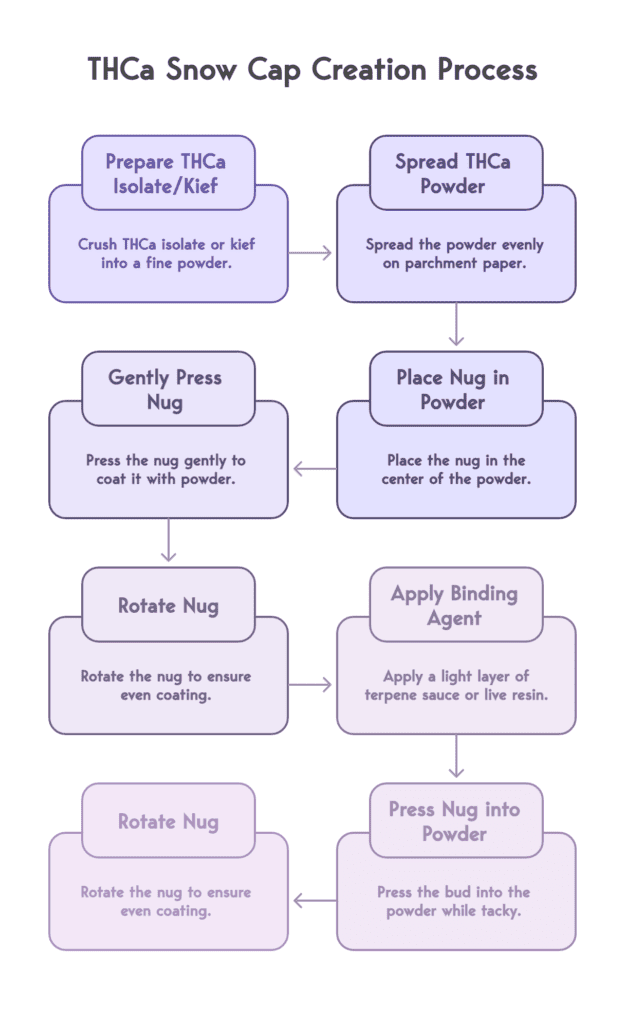
This method works best when your base flower is naturally sticky and fresh enough to hold a crystalline coating without additional adhesive. Start by crushing your THCa isolate or kief to an even consistency. Think fine powder rather than coarse chunks. Spread it evenly across a sheet of parchment paper or a clean, flat surface.
Place your nug in the center of the powder and press gently using your fingers or a dab tool, rotating the bud as you go until the surface is evenly coated.
Work slowly and deliberately rather than pressing hard. You want the powder to build up in layers rather than being packed unevenly. The finished bud should look visibly white and frosty from all angles.
This method gives you better adhesion and is more practical for storage or for flower that’s slightly drier than ideal. Use a clean dab tool to apply a very light, even layer of terpene sauce or live resin across the surface of the bud. Work in sections rather than trying to coat the whole thing at once.
While the surface is still tacky, press the bud into your crushed isolate or kief and rotate it as you did in Method 1. The binding agent gives the crystalline material something to grip, and the finished snow cap will stay intact much longer than a dry-applied version.
Here’s how you can get consistent results every time:
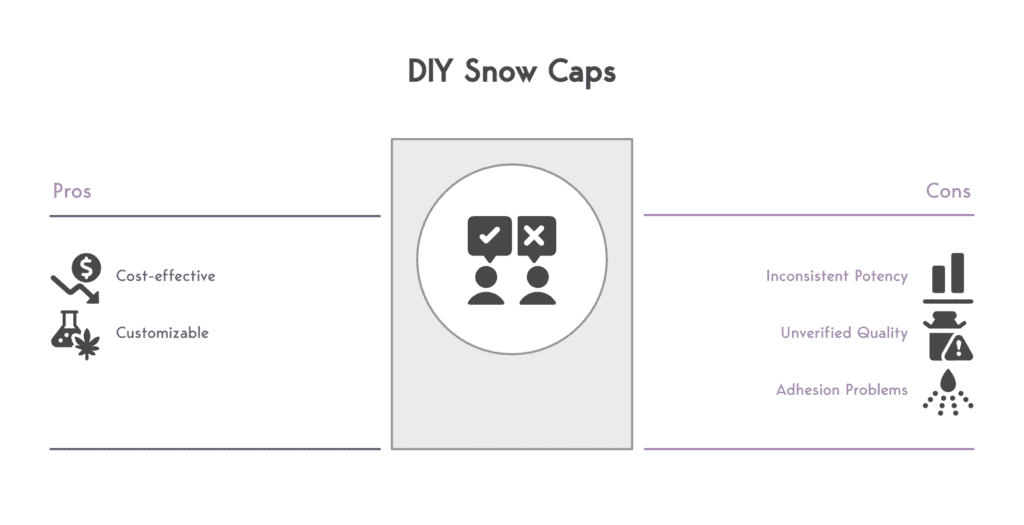
Making snow caps at home is genuinely doable. The gap between a tutorial that makes it look easy and the results most people actually get in practice comes from a few specific factors that are worth knowing about before you start.
The biggest issue with DIY snow caps isn’t the method. It’s the measurement problem. There’s no reliable way to know how much concentrate is actually adhering to each surface area of the bud, which means potency becomes a guess rather than a known quantity.
One side of the nug might have a thick coating, while the other barely has any. This creates an uneven experience where the first few hits are noticeably different from the last few, and comparing one session’s snow cap to another is almost impossible if you’re trying to replicate a specific effect.
The kief sitting in your grinder or the concentrate you picked up from an unverified source doesn’t come with a Certificate of Analysis. Research published in PMC on cannabis concentrates found that over 80% of unregulated concentrate samples showed contamination from residual solvents or pesticides in some form.
That’s not a small number. Residual solvents like butane or hexane can remain in concentrate after extraction, and without third-party lab testing confirming their absence, you have no way to know what you’re actually putting on your flower.
This is a genuine safety concern, not a technicality.
Even a well-made DIY snow cap doesn’t stay that way for long. Crystalline concentrate that was pressed onto the surface without a binding agent will begin to fall off during handling, breaking, or storage. Depending on the manufacturer, sometimes within hours.
The powder settles to the bottom of whatever container you’re storing it in, and by the time you get back to the snow cap, you’re left with a partially coated bud and a pile of wasted concentrate. Using a binding agent helps, but it introduces the variables discussed earlier around oil quantity and burn quality.
If the appeal of snow caps comes down to visually frosted, high-potency flower that hits harder than standard buds, it’s worth knowing that there’s a product category built around exactly that concept — one that solves the measurement and consistency problems from the start.
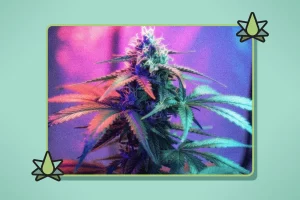
The “frosty” look of high-quality cannabis isn’t just cosmetic. It’s directly tied to the density of glandular trichomes on the bud surface.
Research on cannabis glandular trichomes has shown that these structures are the primary production and storage sites for THCa, terpenes, and other cannabinoids. The higher the trichome density on the flower, the more active compounds are present before any concentrate is even added.
Here’s how trichome-dense, isolate-infused flower stacks up against the DIY approach:
The visual appeal and potency boost that draws people to snow caps both come from the same thing: a high concentration of THCa-rich material on the surface of quality flower.
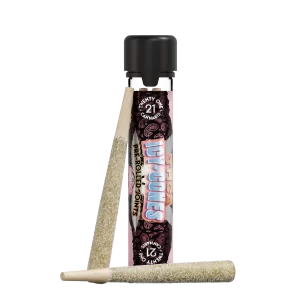
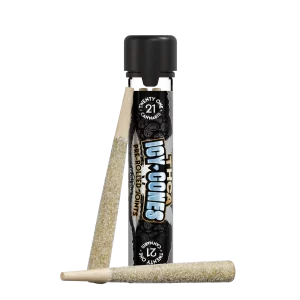
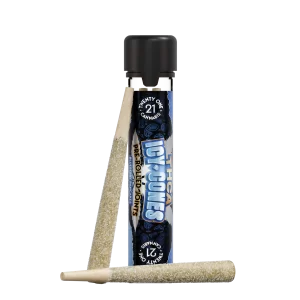
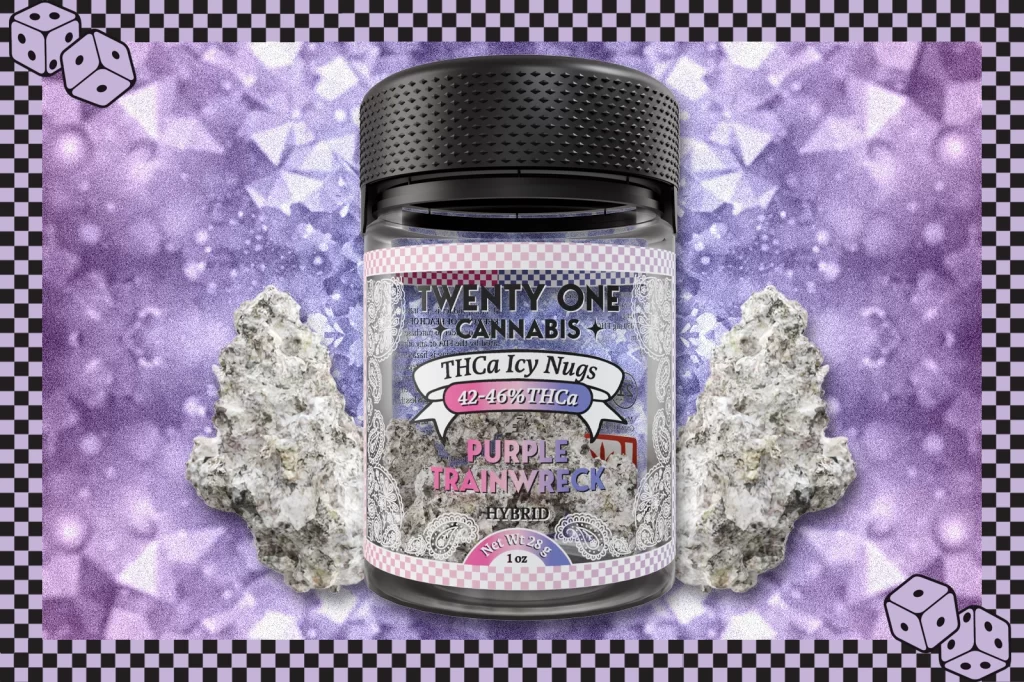
Icy Nugs deliver that natively. The isolate coating is applied evenly during production, not pressed on by hand with varying pressure. The THCa percentage is lab-verified rather than estimated.
And because the base flower and isolate are selected together rather than combined at home, the burn quality, flavor, and effect profile are all consistent from one session to the next. This is the core practical advantage over DIY: you get what the label says, every time.
If you want the frosted, high-potency flower experience without the prep work and input inconsistency, these are worth looking at closely.
Our Gush Mints Hybrid flower is one of the most well-rounded options in the Icy Nugs lineup. Built from a cross of Gushers, Kush Mints, and F1 Durb, Gush Mints comes in at 38% THCa and brings a terpene profile that layers pine, sweet cream, and refreshing mint over a base of sour gas.
For something a bit more skunky, the Critical Mass Indica flower sits at 42-46% THCa and is the pick for anyone whose primary goal is deep physical relaxation. This Afghani x Skunk #1 cross is built around myrcene, pinene, and caryophyllene, which produce an earthy-pine base with sweet citrus on the exhale.
If desserts are more your style, the Purple Gelato Hybrid flower carries the same 42-46% THCa range and traces its lineage back to the classic Sunset Sherbet x Thin Mint GSC cross. Purple Gelato runs dominant on caryophyllene, limonene, and linalool, which contributes to a sweet berry-forward flavor with smooth earthy undertones and a mood-lifting profile that doesn’t tip too far toward sedation.
When you’re buying high-potency THCa flower, especially anything infused with isolate, the source matters as much as the product itself. Twenty One Cannabis sources its flower from vetted farms across Colorado, Oregon, California, and Arizona, with on-site vetting of growing facilities and a strict no-pesticide, no-heavy-metals standard across every batch.
Every Icy Nugs product ships with a batch-specific Certificate of Analysis from a third-party lab, so you can verify the THCa percentage, confirm there are no residual solvents, and know exactly what you’re getting before the first hit. That’s the transparency that separates a premium infused flower from a bag of unknown material you’re trying to work with at home.
Browse our collection of premium THCa products and find the Icy Nugs option that fits your tolerance, effects preference, and strain interests.
Snow caps use a dry crystalline concentrate, typically kief or THCa isolate, pressed onto the surface of intact flower. Moon rocks use an oil-based concentrate to saturate the bud first, then roll it in kief. Snow caps burn more like regular flower and are less harsh to smoke. Moon rocks produce a heavier, oilier smoke and can be more difficult to keep lit without a pipe or bong.
Yes, kief works and is the most common material used for DIY snow caps. The tradeoff is consistency. Kief collected from a standard grinder contains variable amounts of plant material alongside trichome heads, so potency is harder to predict. THCa isolate gives more uniform coverage and a more reliable potency increase per surface area of flower coated.
It depends on how heavily the flower is coated and the potency of the concentrate used. Standard THCa flower typically runs 20-30% THCa. A snow cap made with a generous layer of high-purity isolate can push the total THCa content of the session significantly higher — sometimes doubling or exceeding the potency of the base flower alone. Approach carefully if you’re newer to high-potency products.
Store finished snow caps in an airtight glass jar away from heat, light, and humidity. Glass is preferred over plastic because plastic can trap moisture and affect flavor. At room temperature in a sealed container, a well-made snow cap should stay intact and potent for one to two weeks. Longer storage increases the chance of the concentrate coating drying out, cracking, or falling off the flower surface.
THCa products derived from hemp with less than 0.3% Delta-9 THC are federally legal under the 2018 Farm Bill in their raw, unheated state. Once heated and smoked, THCa converts to THC. State laws vary significantly — some states have restricted or banned THCa products entirely. Always verify the regulations in your specific state before purchasing or making THCa snow caps.


Doctor of Pharmacy, Pharmaceutical Sciences University of Colorado
Co-Founder & CEO at Arvida Labs

You must be over 21 to enter.
GET NOTIFIED ABOUT ONLINE SALES AT 21 CANNABIS!