

FOR HIGH ROLLERS
 Lindsey Goldstein
Quick Answer: THCp flower is made by chemically converting hemp-derived CBD into THCp through a controlled acid-catalyzed isomerization process, then infusing the purified THCp distillate onto premium hemp flower.
Because THCp occurs only in trace amounts naturally, direct extraction is impractical, making laboratory conversion essential. Legitimate production involves four stages: CBD extraction, purification to 99%+ isolate, precise isomerization with rigorous byproduct removal, and uniform infusion onto flower.
Safety and consistency depend on pharmaceutical-grade purification, chromatography, and full third-party testing, separating compliant products from low-quality, unverified alternatives.
THCp flower has become one of the most talked-about products in cannabis, promising effects far beyond what traditional flower can deliver. But when you start researching where to buy it, the questions pile up fast. How does a cannabinoid that barely exists in nature end up coating premium hemp flower? Are manufacturers actually creating something synthetic in disguise? What separates legitimate pharmaceutical-grade production from basement chemistry that could put your health at risk?
These aren’t academic questions. The production process directly determines whether you’re getting a safe, consistent product or rolling the dice with mystery distillate sprayed onto who-knows-what flower. Gas station THCp and lab-tested alternatives might look similar on the shelf, but the chemistry behind them couldn’t be more different.
This guide talks about the complete production process from hemp extraction through molecular conversion to finished flower. You’ll learn why direct extraction fails, how acid-catalyzed isomerization works without requiring a chemistry degree to understand it, what quality control actually looks like when done right, and which specific red flags indicate corners being cut.
Tetrahydrocannabiphorol (THCp) was discovered in 2019 by Italian researchers analyzing the FM2 medical cannabis strain. What set this cannabinoid apart immediately was its molecular structure featuring a seven-carbon alkyl side chain compared to the five-carbon chain found in Delta-9 THC.
That two-carbon difference fundamentally changes how THCp interacts with the body’s endocannabinoid system. Research demonstrates that THCp binds to CB1 receptors with approximately 33 times the affinity of Delta-9 THC, potentially explaining why even small amounts produce notably stronger effects.
This enhanced receptor interaction translates to longer-lasting experiences that many users describe as more intense than equivalent amounts of traditional THC.
The challenge for commercial production lies in THCp’s natural scarcity. Cannabis plants produce this cannabinoid only in trace amounts, typically below 0.1% of total cannabinoid content.
Extracting sufficient quantities through traditional methods would require processing massive volumes of plant material, making the approach economically unfeasible and practically impossible for consistent product manufacturing.
This reality drove researchers and manufacturers to develop laboratory conversion processes that could transform abundant cannabinoids like CBD into THCp through controlled chemical reactions that can then be integrated into products like flower and vape.
Creating THCp flower involves multiple distinct phases, each requiring specialized equipment and expertise to execute properly. The journey from raw hemp to finished product encompasses extraction, purification, conversion, and infusion, with quality control checkpoints throughout.
| Stage | Purpose | Key Actions | Why It Matters |
| Hemp Selection & CBD Extraction | Obtain CBD-rich starting material | Source high-CBD, pesticide-free hemp; extract CBD using CO₂ or food-grade solvents | Starting material quality directly affects purity, safety, and final yield |
| Winterization & Cleanup | Remove plant impurities | Chill extract in ethanol to separate waxes, lipids, and chlorophyll | Prevents contamination and improves conversion efficiency later |
| CBD Purification (99%+) | Create pharmaceutical-grade CBD | Decarboxylation + short-path distillation under vacuum | High-purity CBD reduces byproducts during conversion |
| Decarboxylation | Activate CBD | Controlled heating (~110°C) converts CBDa to active CBD | Necessary for chemical conversion to psychoactive cannabinoids |
| Isomerization (CBD → THCp) | Convert CBD into THCp | Acid-catalyzed reaction under precise temperature and pH control | Most technically complex step; determines potency and yield |
| THCp Purification | Remove byproducts | Multi-pass chromatography (HPLC or column methods) | Separates THCp from Delta-8, Delta-9, and other isomers |
| Testing & Quality Control | Ensure safety and compliance | Test for solvents, heavy metals, pesticides, microbes, and potency | Verifies product is safe, consistent, and label-accurate |
The foundation of quality THCp production starts with sourcing high-CBD hemp from reputable cultivators. Industrial hemp naturally contains 15 to 20 percent CBD by dry weight, providing abundant raw material for conversion.
Selecting organic, pesticide-free hemp prevents contamination that could compromise later stages, since impurities in the starting material tend to multiply through subsequent processing steps.
Two primary extraction methods dominate commercial CBD production, each offering distinct advantages. Supercritical CO₂ extraction uses carbon dioxide held at specific temperature and pressure points where it exhibits properties of both liquid and gas.
This method produces exceptionally clean extracts without introducing chemical solvents, though the equipment costs run significantly higher than alternatives. The resulting CBD contains minimal impurities, streamlining purification and creating ideal conditions for efficient conversion to THCp.
Solvent-based extraction using food-grade ethanol or hydrocarbons works faster and requires less capital investment in equipment. These methods can process larger volumes of plant material more quickly, making them popular for high-volume production.
The trade-off comes in purification complexity, since residual solvents must be completely removed to meet safety standards. According to research on extraction efficiency, thorough solvent removal becomes critical for products intended for human consumption, as even trace amounts can interfere with subsequent chemical reactions or pose health risks.
Raw CBD extract contains more than just cannabinoids. Waxes, lipids, and chlorophyll come along for the ride during extraction, creating a crude mixture that needs refinement before conversion can proceed.
Winterization addresses these impurities by dissolving the extract in ethanol and chilling it to -80°C for 24 to 48 hours. The extreme cold causes waxes and lipids to solidify and separate, allowing filtration through activated carbon or similar media.
This cleanup stage proves crucial for conversion efficiency. Plant waxes and lipids can interfere with the acid-catalyzed reactions used to create THCp, reducing yields and generating unwanted byproducts. Manufacturers who skip or rush winterization often end up with contaminated final products that fail third-party testing or produce inconsistent effects. The extra time invested here pays dividends in cleaner conversions and safer end products.
With waxes and major impurities removed, the extract moves into its final purification phase before conversion can begin. This stage transforms crude CBD concentrate into pharmaceutical-grade isolate through carefully controlled heat application and vacuum distillation. The goal is achieving 99 percent or higher purity, providing clean starting material that converts efficiently without generating excessive byproducts.
Raw hemp extract contains mostly CBDa (cannabidiolic acid), the precursor to CBD that exists in living plants. Converting CBDa to active CBD requires decarboxylation, a process that removes the carboxyl group through controlled heating. Decarboxylation is what eventually makes THCp intoxicating.
Manufacturers typically apply temperatures around 110°C for approximately 60 minutes, though exact parameters vary based on equipment and batch size. Proper decarboxylation activates the CBD without causing thermal degradation that could reduce conversion efficiency.
The final purification step employs short-path distillation, a technique that separates compounds based on their boiling points while minimizing thermal exposure. By operating under vacuum (typically 0.1 to 1 mmHg pressure), manufacturers can distill CBD at lower temperatures than atmospheric pressure would require, reducing the risk of heat-induced degradation. The process runs between 160 and 180°C, with CBD vapor traveling a short distance before condensing into ultra-pure isolate.
This pharmaceutical-grade CBD isolate serves as the starting material for THCp synthesis. Quality at this stage directly determines conversion efficiency and final product purity. Reputable manufacturers test the isolate before proceeding to verify it meets purity specifications, typically 99 percent CBD or higher with minimal residual solvents and no detectable pesticides or heavy metals.
The chemical conversion from CBD to THCp represents the most technically complex and critical stage of production. This process, called isomerization, rearranges CBD’s molecular structure to extend its alkyl side chain from five carbon atoms to seven, creating the unique configuration that gives THCp its enhanced receptor binding properties.
The reaction requires precise control over temperature, pH, catalysts, and reaction time to maximize yields while minimizing unwanted byproducts.
Isomerization relies on acid catalysts to initiate and control the molecular rearrangement. Research on cannabinoid conversion shows that both Lewis acids (like boron trifluoride etherate) and protic acids (like sulfuric acid or hydrochloric acid) can drive the reaction, though each produces different yields and byproduct profiles. The process typically involves dissolving purified CBD in a carefully selected solvent, then adding the acid catalyst while maintaining specific temperature ranges.
Temperature control during isomerization proves absolutely critical. Most conversion reactions run at 80 to 100°C under reflux conditions, with exact parameters depending on which acid catalyst the manufacturer selects.
Temperatures too low result in incomplete conversion, leaving unreacted CBD that reduces product potency. Temperatures too high accelerate unwanted side reactions that generate Delta-8 THC, Delta-9 THC, and various iso-THC compounds that must be separated out during purification.
The pH environment must remain acidic throughout the reaction to facilitate the ring-closing mechanism that extends the alkyl chain. Different acids produce varying results, with some research suggesting camphorsulfonic acid offers more selective conversion to specific THC analogs.
For THCp production specifically, manufacturers may employ additional steps beyond standard THC isomerization to achieve the seven-carbon chain length required for this particular cannabinoid structure.
No isomerization reaction achieves 100 percent selectivity, meaning some starting material always converts into unintended products alongside the target compound.
According to chemical synthesis research, THCp conversion typically yields between 40 and 80 percent depending on reaction conditions, with the remainder becoming unreacted CBD, various THC isomers, and other cannabinoid structures. These byproducts must be separated to produce pure THCp distillate suitable for flower infusion.
Reputable manufacturers invest heavily in purification technology to remove unwanted compounds and achieve high-purity THCp. This typically involves multiple rounds of chromatography using techniques like high-performance liquid chromatography (HPLC) or flash column chromatography. These methods separate compounds based on subtle differences in molecular properties, allowing isolation of pure THCp from closely related cannabinoid structures that might have formed during conversion.
With isomerization complete, the crude reaction mixture contains THCp alongside various impurities and byproducts that must be removed before the material can be used in consumer products. This purification stage determines final product safety and consistency, separating pharmaceutical-grade THCp from contaminated alternatives that flood less regulated markets. The process combines multiple separation techniques with rigorous testing to verify purity and potency.
High-performance liquid chromatography is the backbone of THCp purification, using carefully controlled flow rates, temperature gradients, and solvent compositions to separate the target compound from similar cannabinoid structures. The process works by pumping the crude mixture through columns packed with specialized media that interact differently with various molecules. THCp exits the column at a specific time based on its unique properties, while unwanted compounds emerge earlier or later in the separation cycle.
Multiple purification passes often prove necessary to achieve the 90 to 95 percent purity levels required for quality products. Each pass removes additional impurities, progressively refining the distillate until it meets specifications.
UV detection systems monitor the column output in real-time, triggering collection of the pure THCp fraction while directing waste streams containing contaminants to disposal. This automated approach ensures consistency across batches while minimizing the risk of human error contaminating the final product.
Before THCp distillate can be used to create flower products, comprehensive testing must verify both what the material contains and what it doesn’t.
Residual solvents from the conversion reaction present particular concern, as these can remain in improperly purified distillate at levels that pose health risks. Proper testing panels screen for common solvents like ethanol, heptane, and any acids used as catalysts, with acceptable limits typically below 5 parts per million.
Heavy metals testing ensures the distillate doesn’t contain lead, cadmium, arsenic, or mercury that could have leached from processing equipment or originated in contaminated hemp.
Pesticide screens verify the starting material was grown without prohibited agricultural chemicals, while microbial testing confirms no bacteria, mold, or yeast survived the production process. These safety screens supplement potency testing that confirms actual THCp concentration matches what product labels will claim.
With pharmaceutical-grade THCp distillate in hand, manufacturers face the challenge of applying this concentrated material onto hemp flower in ways that guarantee even distribution and consistent dosing.
The infusion stage transforms two separate components, purified cannabinoid extract and quality hemp flower, into unified products that deliver predictable effects. Three primary methods dominate commercial production, each with its distinct advantages for different product positioning.
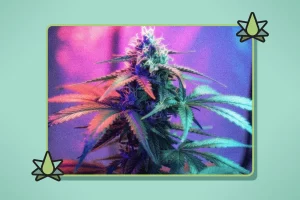
The foundation of quality THCp flower begins with selecting appropriate base material. Manufacturers source hemp flower that naturally contains high concentrations of complementary cannabinoids like THCa while maintaining legal Delta-9 THC levels below 0.3 percent.
Terpene-rich strains provide better flavor profiles and enhanced entourage effects when combined with infused THCp. Twenty One Cannabis sources flower from vetted farms across Colorado, Arizona, California, and Oregon, ensuring consistent quality through direct relationships and facility inspections.
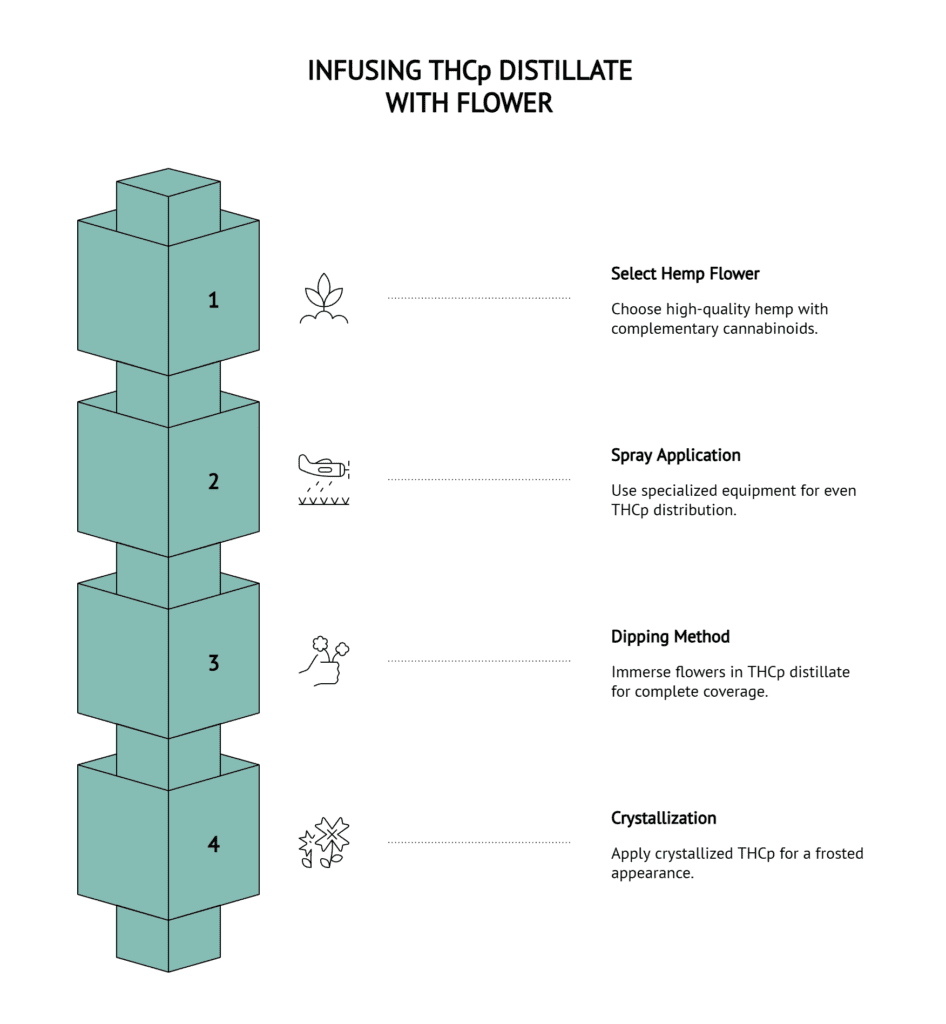
The most common commercial infusion method involves diluting THCp distillate to a specific target concentration, then applying it to flower through specialized spraying equipment. This approach allows precise control over final cannabinoid percentages, with typical THCp concentrations ranging from 0.5 to 2 percent when combined with the flower’s natural cannabinoid content.
Automated spraying systems help with even distribution across all flower surfaces, preventing hot spots of excessive concentration or weak spots with inadequate coverage.
Alternative infusion approaches involve directly immersing flower buds in THCp distillate diluted to appropriate concentrations. This dipping method ensures complete coverage, with the liquid penetrating into flower crevices and coating all surfaces uniformly.
After dipping, excess distillate drips off before the flower undergoes controlled drying that removes residual solvents while preserving cannabinoid and terpene content. The visual result often features more pronounced crystallization than spray application, creating aesthetic appeal that makes the products even more premium.
The most visually striking infusion method involves crystallizing THCp distillate into fine powder, then applying this material to flower surfaces where it creates a diamond-like coating.
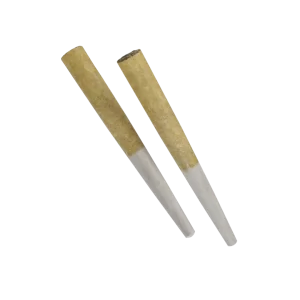
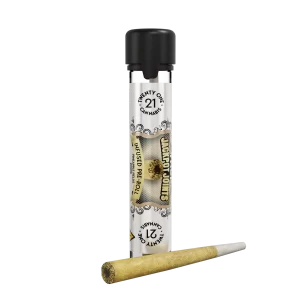
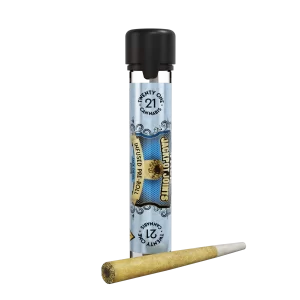
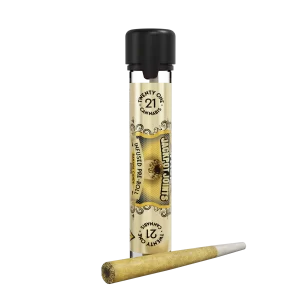
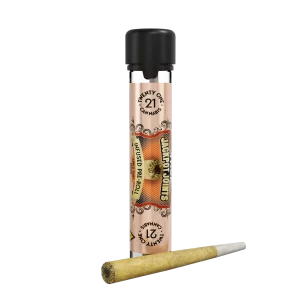
This approach, sometimes called “dusting,” produces the frosted appearance associated with premium products like Twenty One’s Icy Cones prerolls. The crystallization process requires precise temperature and humidity control to form uniform crystals with appropriate particle size for even distribution.
Finding THCp products that meet pharmaceutical quality standards requires identifying manufacturers who invest in proper production processes and testing transparency.
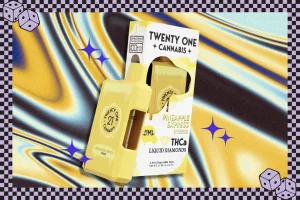
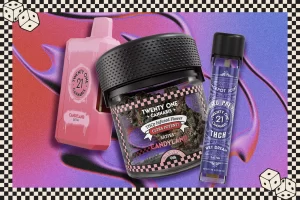
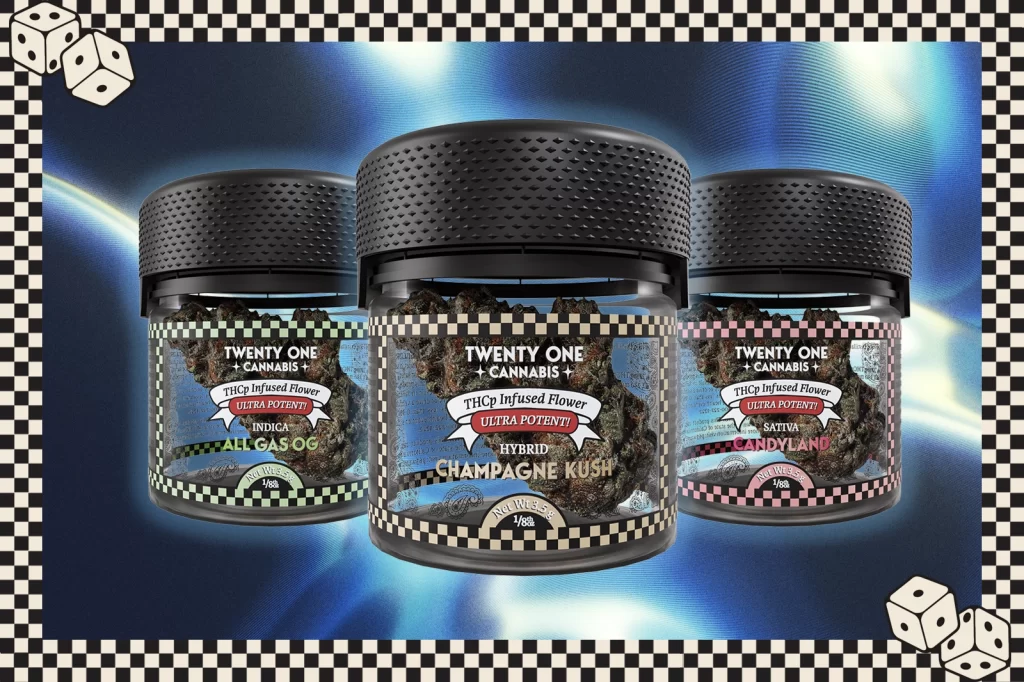
Twenty One Cannabis differentiates through licensed pharmacist formulation and PhD chemist oversight, ensuring every batch meets specifications before reaching consumers. The product line features multiple strains showcasing how proper THCp infusion preserves strain characteristics while amplifying potency.
Our Candyland THCp Flower is a sativa-dominant option that delivers sweet, candy-like aroma with energizing effects amplified by pharmaceutical-grade THCp infusion. The bright, uplifting profile makes Candyland ideal for daytime use, delivering sustained mental clarity and creative focus with the extended duration characteristic of THCp’s enhanced receptor binding.
The strain maintains its signature fruity sweetness through careful low-temperature infusion that preserves delicate terpenes alongside added potency.
For those seeking deep relaxation, All Gas OG combines classic OG Kush genetics with THCp’s intensified receptor binding. The diesel-forward aroma and powerful body effects make this indica-leaning option perfect for evening use and experienced consumers comfortable with stronger products. Each batch undergoes full testing to verify THCp concentration matches label claims while confirming absence of contaminants.
Balanced hybrid genetics deliver both uplifting mental effects and calming physical relaxation in this elegantly formulated option. Champagne Kush’s subtle fruity notes pair beautifully with THCp’s long-lasting potency, creating an experience suitable for any time of day when you want sustained effects without overwhelming intensity. The strain demonstrates how proper THCp infusion enhances rather than masks natural cannabis characteristics.
All Twenty One THCp products feature U.S.-grown hemp from directly vetted farms, GMP-certified manufacturing, and complete third-party testing with accessible COAs. This pharmaceutical approach ensures consistency and safety that separates quality products from questionable alternatives flooding less regulated markets.
Want to get the very best in THCp flowers for your sessions? Browse the complete THCp flower collection at Twenty One Cannabis.
THCp flower occupies a middle ground classified as semi-synthetic. The THCp molecule itself is structurally identical to the trace amounts found naturally in cannabis plants, but commercial production creates it through laboratory conversion of CBD rather than direct extraction. The isomerization process rearranges existing molecules rather than building entirely new compounds, similar to how cooking transforms ingredients through chemical changes while working with natural starting materials.
Delta-9 THC occurs naturally in cannabis at concentrations of 15 to 30 percent, making direct extraction practical and economically viable. THCp exists only in trace amounts below 0.1 percent, rendering extraction approaches impractical for commercial product manufacturing. Instead, manufacturers convert abundant CBD into THCp through controlled isomerization, then infuse the resulting distillate onto hemp flower.
Visually, THCp-infused flower often displays slightly more crystalline appearance or pronounced “frost” due to the distillate coating. Quality infusion methods preserve the flower’s natural structure and terpene profile, making detection difficult without laboratory analysis. The most noticeable difference appears in effects rather than appearance, with THCp delivering significantly stronger, longer-lasting experiences than equivalent amounts of natural high-THC flower.
Always purchase from brands providing third-party Certificates of Analysis showing exact cannabinoid percentages, residual solvent testing below 5 parts per million, heavy metals screening, pesticide analysis, and microbial contamination tests. These documents should be accessible before purchase through QR codes or website databases. Reputable manufacturers welcome questions about testing and provide complete transparency.



Doctor of Pharmacy, Pharmaceutical Sciences University of Colorado
Co-Founder & CEO at Arvida Labs
You must be over 21 to enter.
GET NOTIFIED ABOUT ONLINE SALES AT 21 CANNABIS!